Author: Claire

  • Superman and The Manosphere’s Superhero Complex

    Superman and The Manosphere’s Superhero Complex

    Photo by Esteban López on Unsplash

    For ages, offline, I’ve been writing and wanting to share some of my thoughts on what’s been bothering me about the manosphere. The latest version of my work contains a few segments, and this post is inspired by one of them.

    I’ve noticed a curious trend in the critiques of James Gunn’s latest film, and rather than offering a long preamble, I think I’ll cut to the chase.

    Looking into why people don’t like Gunn’s version of Superman brings up articles like this one. (And in my list of search results, I couldn’t help but notice a piece entitled, “They’re Literally Angry at Superman for Being Nice”–something that I might read, even though I’m pretty sure the writer and I are on the same page.)

    Superman–as depicted in James Gunn’s latest film via David Corenswet–troubles many Big C Conservatives and their acolytes because he violates a core tenet of the manosphere. 

    Specifically, this:

    Physically fit, good looking men are NOT supposed to demonstrably (earnestly) care about, or be sensitive towards others. (Here, of course, “others” refers to those members of humanity who are vulnerable or likely to need their help–or, hell–are just people who may be different from them, and therefore have experienced life differently.) These men don’t need to practice kindness of any kind in order to get what they want out of life.

    And if a man is white, that rule goes double for him, and six times on Saturdays.

    But Claire–you say–what are you talking about? When has one of the Manosphere’s Leaders–herein, otherwise known as Podcast Bros–dared to utter such a thing out loud?

    Well, it may not have been explicitly said, but time and again, such a guideline has been HEAVILY implied and encouraged.

    Within the manosphere’s media, individuals and causes that require sensitivity, depth, and nuance are mocked. You could be talking about the environment, race or racism, equality…

    (And by the way–the way some of the leaders of the Dudebro Dynasty used false rhetoric over time to slander the concept of DEI needs to be studied…) 

    Time and again, ANY call for men to help or generally understand and accept various members of humanity is depicted as laughable and somehow beneath what “REAL” men ought to be interested in.

    Men who demonstrate any sort of sensitivity to others–such as women–are called names like “cuck” and at least one other term that escapes me as I type.

    Meanwhile, those who tell the truth about what the rest of humanity would appreciate in men are vilified and treated as The Enemy. 

    Womanese

    I remember a few weeks ago, I saw a video wherein a man noted certain qualities that he expected from a woman in a relationship. In return, the woman shared her hopes concerning a partner.

    And what did the man say in response? He declared that she was speaking “womanese”–as in some sort of foreign, woman-specific language.

    In return, I thought, “Pardon me, sir. But don’t you want to end up with a woman? Shouldn’t you care about how we think or what we genuinely desire?”

    Within the manosphere, Dear Reader, I MUST ask: Where is this desperate need to make normal things sound repugnant coming from???

    Never mind. I’m getting away from myself. 

    One thing that I want to point out is that intentionally casting everyone that isn’t A Certain Type of Man or Person as The Enemy isn’t getting these men where they think it is.

    And indeed, as I was saying–my main grievance at this time stems from the fact that within the manosphere, the most basic of human traits connected to kindness–an INTRINSIC and VERY popular human value–are lied about and portrayed as antithetical to what men should aspire to. 

    If you don’t believe me, let’s consider how the manosphere regards the “s” word, aka something that’s–judging from their reactions–one of the most wretched of all things in this world:

    Safety.

    Everything is… AWFUL?

    Let’s kick off this part of my discussion with a little comedy, shall we?

    Take a minute and watch this.

    I remember the first time I saw “The Official Woke List”. I thought that whoever came up with it deserved All of The Awards.

    Seriously.

    All great comedy contains grains of truth. And watching the podcast host receive Colin’s litany of “woke” offenders reminded me of some of the top Manosphere Leaders’ content. Over time I’ve noticed they’ve been heavily invested in warning their audiences about society’s supposed dangers. 

    And did you notice what “Colin from Portsmouth” shouted at 0:47?

    You can run it back if you want… 

    Among all of the things that he listed as “woke” and detrimental to civilized society, he barked

    “PLACES WHERE PEOPLE FEEL SAFE!!!”

    Now, I’ve seen the way Podcast Bros discuss safety, and in particular, people’s desire for safe spaces. Watching them, you might believe that safety and safe spaces are something needed by people who are mewling, immature, or inferior. Meanwhile, within society, who tends to speak openly of needing a safe space?

    Nearly anyone who isn’t a straight white male.

    And in saying that, I can’t help but think about what I believe people are after when they (we) say they want a safe space–or just to feel safe. 

    Which makes me ask the following:

    If you’re a man who’s reading this, whether alone or around others, don’t you appreciate being in places where you are

    • Genuinely listened to–especially during your most vulnerable moments
    • Taken seriously
    • Respected
    • Comfortable, not made to worry or needlessly feel stressed
    • Not at risk of being baselessly ridiculed or criticized
    • Not at risk of being attacked–physically, verbally, or otherwise

    I could go on. But don’t you (men) want to be able to experience this sort of social decency–for lack of a better term? 

    Why, then, depict safety as some sort of monstrous enemy?

    I don’t mean to lump all men into the same massive stereotype. But for the most part, I could argue that a large percentage of them don’t have to worry about being disrespected or feeling unsafe to the degree that other people do. 

    Perhaps that’s why certain Podcast Bros have so successfully portrayed the concept of purposely seeking safety as ridiculous. Because so many of their audience members can’t fathom something that, as adults, they haven’t necessarily needed. Or at least had to consider to the extent that others do.

    Nevertheless, I’ve been alarmed by the lack of maturity the manosphere has displayed regarding this subject. Just because you don’t need something, that doesn’t mean it isn’t important to someone else. Especially when that someone is more vulnerable than you are.

    And yet…

    By now, if you’re a heterosexual man and you’re reading this, and you still don’t understand why other people value safety, I’m going to offer you the following illustration. Take a moment, and ask yourself: What’s your relationship like with women?

    I’m not even talking about long term relationships, or how frequently you date. Just think.

    Do women find you attractive? Do they simply enjoy being around you? Do you appreciate their attention?

    If you answered those last few questions with a “yes”, then know this: If women didn’t FEEL SAFE around you, then they (we) wouldn’t want you within a thousand miles of them. Period.

    Understand: Contrary to what the Podcast Bros have been spewing, the word “safe” and its derivatives aren’t some funny, loopy buzzwords. And safety is not just a human right. It is a human value. Something that most human beings genuinely appreciate, on a molecular level.

    Anecdotally speaking, I’ll tell you–a few days ago, I saw a social media post where someone asked women–apart from material factors such as money, what did they really want in a man? 

    “Safety” and its cousins–words relating to kindness and sensitivity came up time and again. 

    Meanwhile, for some reason, Podcast Bros seem dedicated to encouraging men to be the antithesis of what is needed for them to succeed in their interpersonal relationships–romantic and otherwise. 

    Isn’t it Ironic?

    Don’t you think?

    While working on edits for another story, it hit me: The Men of the Manosphere provide their mostly (white) male fans with THE ULTIMATE Safe Space. 

    Really. Think about it.

    Their takes on humanity’s pressing issues fall on the ears of a large, attentive audience. Their views are supported and thus far haven’t been questioned in a way that inspires them to change course.

    All the while, the information that the Podcast Bros share encourages men to remain culturally impotent. Through their programming, the public sees the hosts modeling behaviour and using language that encourages their audience to believe that it’s fun and badass to be ignorant of others’ basic needs.

    And yet, in spite of their eagerness to support popular lies about their chosen topic(s), they have the gall to regard others with dismay and disdain.

    Why?

    Because, apparently, the mainstream doesn’t appreciate their “special” knowledge and how they conduct themselves.

    But is that really what’s wrong?

    Or, could it be that various individuals like me tend to avoid Podcast Bros and their True Believers because they’re committed to upholding ignorance?

    In all seriousness, their loyalty to these men’s ideologies is downright frightening. In the end, I wonder what dividends these men’s blind fealty to the Dudebro Dynamos is yielding in their relationships, apart from frustration.

    And on a personal level, is it any wonder that certain men end up like Colin from Portsmouth? He sounded so angry, and his portrayal would have been truly comedic if I wasn’t willing to bet everything that it was grounded in reality.

    When you’re invested in thinking the worst of others for absolutely no good reason, just how good can you expect your mental health to be?

    My Point? And Perhaps Superman’s

    Human beings are powerful. Men, in particular, are powerful. This is absolutely NOT a bad thing in and of itself.

    Yet so many men are wasting their abilities and energy, and tying themselves into knots by engaging in counter-productive habits such as insisting that the most normal and benign of human traits are their enemy. They end up judging their fellow human beings accordingly, and needlessly damaging their connections with others. 

    Yet in reality, it’s their attachment to weaponized ignorance that is hurting not only humanity on a broad scale, but them as well.

    The manosphere’s leaders seem to think it’s a shame that men aren’t loved or appreciated the way they used to be. (Not since the proverbial good old days, anyways.) And yet all the while, they leave out the fact that genuine love and appreciation are a result of reciprocal interaction.

    From what I’ve observed, the manosphere teaches men from a selfish space–that they deserve God knows what (*gestures broadly*) merely for existing. Meanwhile in reality, it’s vital to remember a timeless truth: At the end of the day, people are loved for how they treat others.

    And contrary to what contemporary society likes to trick too many of us into believing, attention is NOT love.

    Or, put into superhero terms: Superman isn’t a sensation simply because he’s good looking and has powers. He is genuinely loved because he actually cares about and uses his powers to help others.

    Meanwhile, the manosphere has their followers sulking over a lack of superhero treatment, while encouraging them to offer their fellow humans less than the bare minimum. 

    I’m longing for the revolution: The days when the manosphere movement’s leaders and followers awaken and realize that ALL human beings deserve better–including them.

  • Here’s the thing about fact checking.

    These are some thoughts I had before the 20th. And I haven’t changed my mind.

    A lot of people these days want to reserve their right to believe whatever information they like, whether it’s actually correct or not. They long to hold onto their ideas, even if believing them will result in others being harmed. 

    They may say that they don’t mean for these outcomes to occur. Yet they remain shortsighted.

    Sadly, the lies people tell publicly these days only tend to negatively affect a certain segment of the population.

    And if you are a woman, or Black, or like me, both–or some other flavour of “other”–when you dare to comment on the pending doom brought about by popular, publicized lies, what happens?

    Certain types of media intentionally interpret our words of warning as whining. Laughable. Meaningless drivel–having the potential to kill everything from people’s joy, to their bank accounts. And the faithful among their audiences believe them, and in turn grow addicted to not taking us seriously.

    To far too many, feeling good about themselves at all times matters more than recognizing the truth about society.

    Meanwhile, at the root of it all, all we’ve really been asking for is help. Or just the basics—like respect.

    As they say, genuine kindness costs nothing.

    To me, right now, our collective future looks bleak.

    Not entirely. But I don’t want to wait until An Evil Unknown takes place in society–something fomented via social media and the internet–before those who enjoy keeping their heads in the sand have an epiphany.

    One could easily say that such incidents have happened already. But have people been willing to think about them in ways that will bring about sincere, sustainable and positive change? Because that is what we truly need.


    Photo via Joice Kelly on Unsplash.


  • Your 40s: Reality, Perceptions, and Plastic Surgery

    Do you know what I absolutely love? And by “love” I mean HATE…?

    The way the public discusses aging. In particular, I’ve noticed certain stereotyping related to women who are over 40.

    On social media I keep seeing plastic surgeons who claim to know which celebrity has had what done to their face. These people seem to love nothing more than showing folks photos of famous 40-something women and screeching about how much work they’ve supposedly had done.

    Before I continue, I should offer a disclaimer: I don’t think there’s anything wrong with having wrinkles. As for me personally, there’s a high chance that I’ll develop laugh lines. And I’m currently keeping an eye on the area under my eyes just because…

    That said, concerning alarmist plastic surgeons, I can’t help but wonder: Do they know any women in their 40s? I mean, in real life?

    During a woman’s fourth decade of living, concerning our appearance, anything is possible. Some of us may indeed have deep wrinkles. But there are others among us who don’t. And speaking from experience, having smooth skin at this age doesn’t necessarily require Botox and access to Hollywood’s most popular procedures.

    So why do some doctors insist on depicting us this way?

    On one hand they may genuinely believe that women in their 40s can’t be wrinkle-free without going under the knife. On the other, I think they’re trying to give older women a complex. Mind you for some, I imagine it’s some sort of strange marketing tactic. Nevertheless–either way, I’m tired of their rhetoric.


    Photo by Sam Moghadam Khamseh

  • The Idea of the Alpha Male Idol is No More*

    The Idea of the Alpha Male Idol is No More*

    At least for me. Like my childhood belief in Santa Claus, the man and the myth are truly, merely, a legend. For all I know there may be real-world examples that fit the bill. But the hope of finding his example among public figures is no longer realistic.

    But has it ever been? I tend to frown on the idea of worshipping humans. But recent events have made me realize that depending on how certain people show up in the world, I have held onto certain expectations.

    And I know that depending on who you consult, the term “alpha male” can have a negative meaning. For instance, one definition I discovered mentioned words like “domineering”, which led to a definition of that term, involving the word “arrogant”.

    But let’s connect for a moment to its positive connotations: There is the notion of the “alpha male” as a larger-than-life man who people look to in order to fulfill a leadership role within society. Some might consider him a hero-like figure who cares about humanity. Who has backbone enough to stand by his convictions. Who believes in defending and protecting the vulnerable.

    He also knows certain truths. Like the fact that POC and others deciding not to be friends with bigots is a matter of personal dignity, and not us trying to be “divisive”.

    Now, in response to what I’ve suggested, some may try to argue that I’m selfish, and only value these sorts of men for what they can do. “You only want something…”

    Well, excuse me. First of all, that’s not true. Secondly, don’t these men want something, too? I thought one of their objectives was to be respected and admired. (I had the impression that some of their favourite media figures claim that these qualities were lacking in their relationships.)

    But what else could they possibly desire?

    What about the idea of good people feeling at ease around them?  (Never mind those who are evil, or unkind! They can cower, if they choose.) Additionally, of course, there’s the idea of people believing in alphas and thinking of them as—as mentioned before—triumphant leaders in our culture.

    Here I must pause and note that there are those who will disagree with me. They may see the danger in making assumptions about people based on their gender and want to argue that the road to respect and admiration is a two-way street. And I couldn’t agree more!

    If so, then surely, they understand that for most people, respect and admiration are built on a foundation of trust.

    Unfortunately, I feel like that is a concept that certain folks have forgotten over the years. Trust is something that is normally earned. It shouldn’t be assumed, nor is it something that one is entitled to simply because they are born in a particular package. Yet that seems to be what certain folks have been taught and have come to take for granted.

    Meanwhile, it is hard to trust someone who is invested in ridiculing people for things like simply being honest about the harm done by prejudice and injustice.

    Returning to the idea of alpha males being the stuff of legends, in a certain sense, I hope that somewhere on Mount Olympus, the Great Heroes are seeing how their progeny have come to think of others, and are reviewing their Code of Conduct.


    *This article contains hyperbole. There are definitely “great” great men out there. But there are negative examples as well. And lately, the words of one in particular have left me disappointed.


    The picture in this post is an edited version of a photo by Marcin Lukasik.

  • Cowboy Carter: More of where my mind has been.

    Cowboy Carter: More of where my mind has been.

    A final post before The Big Release.

    As an antidote to the negativity in my last post, read this article from Vulture.

    And here’s another look at the performance that inspired the gift that we’re about to receive.

    I read that Vulture piece the other night, and it lifted my mood. Although Beyonce’s performance was met with negative—and in certain instances, blatantly racist—energy, the days leading up to it weren’t all filled with sour grapes.

    For one thing, Beyonce was at the CMAs because someone in charge genuinely wanted her to be there. And I quote:

    Robert Deaton, executive producer, CMA Awards: I was in L.A. when Lemonade dropped. When someone like Beyoncé puts out an album, you listen to all of it. “Daddy Lessons” came on, and I was like, “Man, this is so Texas country. This would be great for the CMAs.”

    That afternoon, I saw an article going through each cut, and when it got to “Daddy Lessons,” it said, “This is Beyoncé’s CMAs performance.” I’m like, Okay, someone else is thinking that! Normally, I make asks to be on the show after the nominations come out. But this was different. This was Beyoncé. I didn’t know anybody in her camp, but I did get the emails for the publicist and manager. I sent a note to Beyoncé’s team that day, going, “I don’t know what your plans are, but the CMA Awards are in November. This would be a great performance for everybody.”

    via Vulture

    The rest was, truly, history. (Go read the whole article if you can. It’s pretty damn good.)

    As an aside, I can’t help but laugh as I contrast Deaton’s reaction to “Daddy Lessons” with those of others who question(ed) whether or not it’s a country song. Anyone with ears knows what genre that track is.  

    Meanwhile, within the stunning performance, there’s one heartwarming detail that I keep recalling—Beyoncé blew kisses into the crowd. I may feel a bit sad and protective of Bey concerning what might have transpired. Yet I keep trying to console myself with the notion that she had a few friends in the audience.

    Other thoughts…

    Can we kill the crabs in the bucket?

    Reyna Roberts. Tanner Adell.

    Those are two of the amazing Black country artists that the Instagram algorithm threw my way after Beyoncé released her country singles. I was already aware of people in the mainstream, like Mickey Guyton. And I know that there are more.

    Yet while I was thrilled to discover Reyna and Tanner, I’ve been alarmed by some of their so-called-fans’ attitudes. Beneath their Instagram posts, as expected, there have been racists. But in addition to them, I couldn’t help but notice comments made by certain (Black) fans. The words that irritated me the most fell into two camps, which I’ll paraphrase.

    Number One: “Beyoncé needs to stay in her lane*. Look at how she’s taking away from REAL Black country artists!!”

    Concerning “stay in her lane” I’ve actually seen someone use that language. And I think it’s shameful. For one thing, no single artist is obligated to only perform one genre of music.

    And ANOTHER thing: Look at the doors Beyoncé is kicking down with this new release! As I write this post, I have yet to hear Renaissance Act 2. Yet let’s not forget that “Texas Hold ‘Em” hit number one on the country charts.

    I know that she’s not the first Black woman to do so. Lord willing, she won’t be the last.  

    The second type of sentiment that I’ve seen and want to address? “The only reason you say you like Beyoncé is because you have to, as a part of the music industry. Blink 3 times if you need help!!” Shoutout to Reyna Roberts. In defense against one of those comments, she said that one of the reasons she sings is because of Beyoncé.

    Talk about giving props to your inspiration!

    And while I’m at it, shoutout to Tanner Adell. I wonder how many people complaining in her mentions know that she’s featured on Cowboy Carter?

    Furthermore, this idea of musicians secretly being manipulated into liking Beyoncé is utterly ridiculous to me.

    Beyonce’s success in the country music genre does not mean that other Black artists are doomed to fail. If nothing else, I think she’s making their stars shine brighter.

    As she said

    Touching everything in my plain view
    And everything next to me gets lit up, too.

    “I’m That Girl” – Beyoncé

    I don’t know about you. But I’m leaning into this long weekend. I’ll be thinking of Jesus and bouncing along to Cowboy Carter.

    Happy Easter to you all!


    Photo by Israel Palacio.

  • Countdown to Cowboy Carter: Contemplating An Old Controversy

    Countdown to Cowboy Carter: Contemplating An Old Controversy

    As previously discussed, when I first heard Beyoncé’s new singles, I couldn’t help but reflect on her “Daddy Lessons” performance with the Chicks at the CMAs. But I didn’t only remember her performance. I also clearly recalled some of the negative buzz surrounding it.

    Among other things, I remember that A Certain Country Star was so disgruntled, that they shared their thoughts on Beyoncé’s presence on Twitter. In response, people were very quick to call what they thought was a spade a spade, and took note of this individual’s perceived racism. (I’m not sharing the person’s name directly in this post because I’m focusing on their attitude over them as an individual. That, and I realize that more than one person had an issue with Beyonce’s performance.)

    Years later, after seeing this person’s obvious displeasure, I wondered, “Did they feel the same way when Justin Timberlake took the CMA stage with Chris Stapleton?”

    Well, apparently, they did.

    Not too long ago, I looked up a story about Country Star’s reaction. Their statements, as featured in this article, mentioned Timberlake and other artists. (And if you have time, reading the whole piece will give you a clearer picture of their thoughts.)

     Among other things, they said,

    “…for every pop performance or R&B performance or any other type of genre performance that you have on the CMA Awards, that takes time away from somebody who is a country music artist, doing country music songs, releasing country music singles to radio, selling country music under that moniker to people all across the country and across the world. That’s taking time away from them. There are other artists that could have been just as much of a draw and that really should have been involved in that slot to celebrate the music that they have helped to create.

    The other day I started to unpack this statement. But I’ve decided to spare you from reading my detailed ideas. For now, I’ll just say that I think that in addition to racism, there are other prejudices that the country music industry needs to divest itself of.  

    From “Daddy Lessons” to Today

    And yet, looking back at Beyonce’s “Daddy Lessons” era, I couldn’t help but remember certain other odd and unfortunate things. For instance, I’d heard that someone in country music media had claimed that “Daddy Lessons” couldn’t be a country song because people from Music Row—aka Nashville’s songwriting community—didn’t have a hand in creating it.

    More recently, I was watching the opening of the second episode of Friends in Low Places. While discussing the element of surprise in performance, legendary artist Garth Brooks says, “When we started our careers, I didn’t understand why all of a sudden country music couldn’t do the things that the other genres could.”

    Moments later, one of Brooks’ staff notes that people had critiqued his performance style. Apparently, whether in an arena or a more intimate setting, Brooks dared to make everyone feel welcome. The industry response? “That’s not how we do it”.

    I could get into other artists, and things I’ve heard and wondered about. But ultimately, I have the feeling that the Country Music Industry is incredibly staid and stuck in its ways. And if white country artists experience opposition over the trivial things, I can only imagine what Black and other diverse artists go through.

    Needless to say, Beyoncé’s newfound presence in the genre has made me hopeful. I look forward to her continuing to disrupt it for the greater good.


    Photo by Chad Morehead.

  • Poetry in Progress: Where to share?

    So I’ve taken to writing poetry. Or, rather, my spirit has taken to sharing pieces that I’ve randomly written over the years.

    I’ve only just begun to bring my private work to the public. And I’d love to do it more often.

    That’s why, for various reasons, I’ve been looking at what it takes for my work to be featured in a literary journal.

    Most of the reputable ones that I’ve reviewed want you to submit work that hasn’t been previously published. Meaning, your poetry cannot have appeared in another literary journal. But I’ve also noticed journals going on to explain that your work cannot have appeared online in places such as your personal website, or social media. 

    In this era of Instapoetry, that’s bound to cramp someone’s style. 

    And for a little while, I’ve felt conflicted. I know what the establishment’s rules are. But deep down, I don’t want to be punished if one day I decide to spontaneously share my material.   

    Finding poetic freedom

    Last week I was relieved to find Button Poetry. They seem to be a legitimate organization. They also seem to understand that art can’t always be contained in an overly-formal box. For example, if you share your work online, that won’t lead them to dismiss your work.

    Meanwhile, much of my poetry is still under development. I’m dusting off old pieces and surprising myself with new ones. I don’t yet know what will become of this new era of my writing, but whether I share it on a stage, or an online page, I know one thing for sure: My artistic freedom must supersede everything.


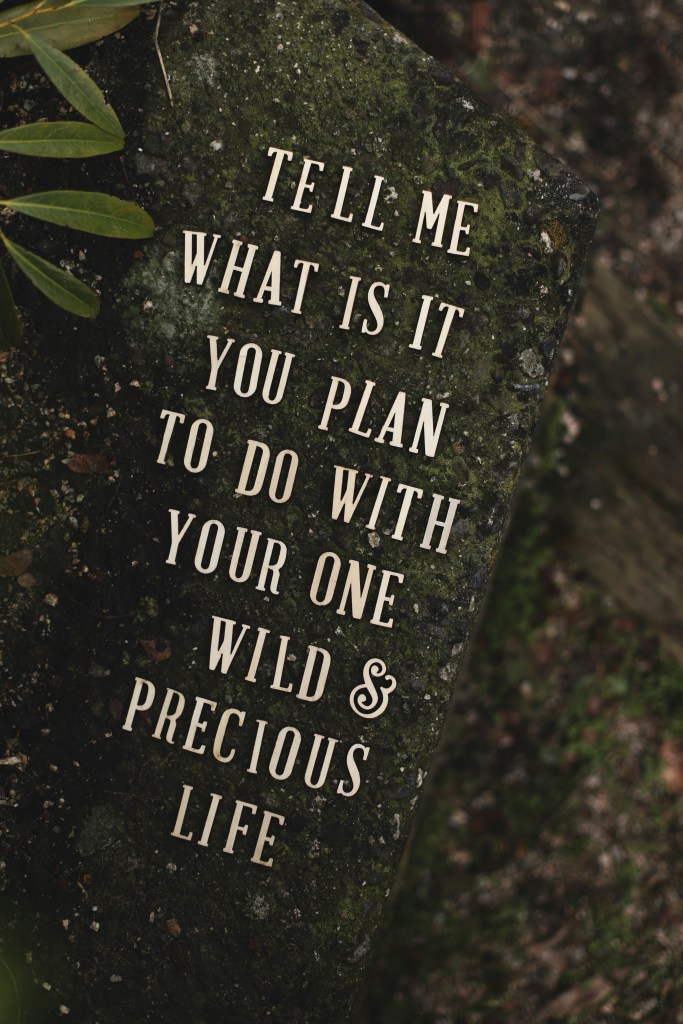
    Photo by Ksenia Makaganova, featuring a quote by Mary Oliver.

  • Watch It: American Fiction

    Watch It: American Fiction

    Note: This post contains minor spoilers.

    On Sunday night while American Fiction was winning the Oscar for Best Adapted Screenplay, I was watching it on my computer. The movie’s on Amazon Prime, and when I selected it, it was purely a coincidence. While I didn’t feel like watching the Oscars, I kept seeing Issa Rae, Sterling K. Brown, and more of its stars in my Instagram feed. I only realized why they were hitting the red carpet after I pressed play.

    As for the movie itself, you may or may not have already seen the trailer.

    The Plot

    American Fiction tells the story of Thelonious “Monk” Ellison, a professor and author from Boston. He’s hit a bit of a rut in his career—a lull, if you will. He hasn’t sold a book in ages. That is until one day he witnesses the success of a novel by a fellow Black writer.

    It’s impossible for Monk not to notice the seemingly stereotypical portrayal of Black people and their circumstances in his peer’s work—along with its staggering success. Eventually, Monk recognizes that he needs to swallow his pride if he wants to pay the bills. He decides to throw his hat into the Popular Black Fiction ring by writing a book of his own—My Pathology My Pafology. In order to preserve his professional reputation, Monk releases this new volume under the name Stagg R. Leigh.

    My Many Thoughts

    We live in an era where the desire for authentic representation of Black people and other diverse voices is abundant. And across a host of industries, publishers and producers have been eager to answer audiences’ requests. Meanwhile, I’ve been noticing the quality of representation that’s available. I can’t help but love the playful and serious ways that American Fiction asks viewers to consider how Black people are portrayed in media.

    One thing I enjoyed about this movie is that it’s not solely a hard-hitting satire. I genuinely enjoyed the scenes featuring Monk and his family. Their interactions added a warmth to the story that might have been absent if it had remained focused on his professional pursuits.

    As for the script itself, what is it that people say these days? “Ten out of ten, no notes”? When you watch American Fiction, you’ll see very easily why it won an award for writing. The dialogue never disappoints. It was clear to me that writer-director Cord Jefferson heard that classic instruction to “make every word count” and actually listened. Throughout Fiction his work is consistently sharp, poignant, and never boring. Even before I knew the reason for its Oscar win, I kept asking myself, “Who wrote this movie?” And I scream-laughed several times.

    My only nitpick? My inner critic wanted to offer a minor rebuttal against a character’s comment on the word “potential”. I won’t get into detail about how it’s discussed. But I will say that I’m reluctant to cast this word in a negative light. Prior to the way it’s highlighted in this film, I mainly thought that people used “potential” when speaking about something or someone that possesses undiscovered excellence.

    Incoming spoiler: As seen in American Fiction‘s trailer, although Jeffrey Wright’s Monk writes My Pafology as a joke, it’s embraced in literary circles and is quickly published. Meanwhile, along with a small group of other writers, Monk is asked to judge a set of books for a literary award.

    And guess which book becomes the top candidate for said award?

    Among the judges, Monk and the sole other Black author aren’t comfortable with Stagg R. Leigh’s book. Yet after they state why Leigh’s work is unacceptable, a well-meaning white female character pipes up and says, “I just think it’s essential to listen to Black voices right now.” In response, I laughed, sighed, and said to myself, “Oh my God. Nooooo!”

    How many times have I heard or read that sentence—or something like it—over the past few years? And why does it drive me crazy?

    It calls to mind a trap that too many people fall into: The belief that in the pursuit of diversity, all art ought to be publicized and praised—even when the vision behind it seems skewed.

    Which begs questions like: Who controls the sharing of stories about Black people? When approving Black-focused art, what are gatekeepers’ expectations? What kind of preconceived ideas do they have about what Black people are actually like? What, if any, trends are there in what gets approved? And what can be done to ensure that a variety of voices are able to speak?

    In a post- Black Panther and Woman King world, I know that some people might think stereotyping is a problem from the past. But consider Cord Jefferson’s answer to the first question in this interview.

    There are people currently producing movies who have limited ideas about what Black people are like. And not only do these people produce movies, there are likely also people who think this way who are studio heads—able to determine which projects go into production in the first place.

    Not to mention the number of people who let the art that they consume determine their expectations. Regardless of whether you depict people as rich or poor–high or low class–unbalanced portrayals of people from diverse backgrounds often influence viewers’ real-life perceptions and behaviour.

    But I digress.

    American Fiction is an unapologetically critical look at media makers’ insistence on embracing limited ideas in spite of the varied realities of Black lives. I’m glad that this film was made. As Cord Jefferson’s directorial debut, it was brilliant, and I look forward to seeing what he does next!


    Stock Photo by Thibault Penin

  • Get in, Loser. We’re playing NEW BEYONCÉ!

    Get in, Loser. We’re playing NEW BEYONCÉ!

    Where do I begin?

    Photo of the Texas flag.

    I’m in Canada, and although CTV aired some of of last night’s Super Bowl ads, I didn’t see them all. And I most definitely didn’t catch this one.

    Beyoncé’s releasing new music?!

    Let me retrace my steps.

    Before I went to sleep–as one is wont to do–I felt the need to google Beyoncé.

    That’s when I came across this article. The headline alone had me at hello!

    Beyoncé Announces Country-Themed ‘Renaissance Part II’ Album in Verizon Super Bowl Ad, Drops Two New Songs

    *Flashback to Lemonade*

    Please note that I am a sucker for nearly every genre of music out there. I loved “Daddy Lessons”, and Bey’s performance on the CMA Awards with The Chicks blew me away.

    It felt like a moment to me. Like I was witnessing a glimpse of a new horizon.

    I’ve watched that video more than once, and every time, I end up having the same unfinished thoughts. 

    “If Beyoncé ever made a country album…?” (Can you IMAGINE?!?!!) Followed by, “Something else is going to come from this…”

    But I was never quite sure of what.

    Well. With Beyoncé’s next album, it looks like that “something else” is nearly here.

    Did I also mention that some of her collaborators are Canadian? Somebody check the song credits—and call the CBC!!*


    Texas flag photo by Pete Alexopoulos.

    *Edited to feature the lyric videos for Bey’s new singles.

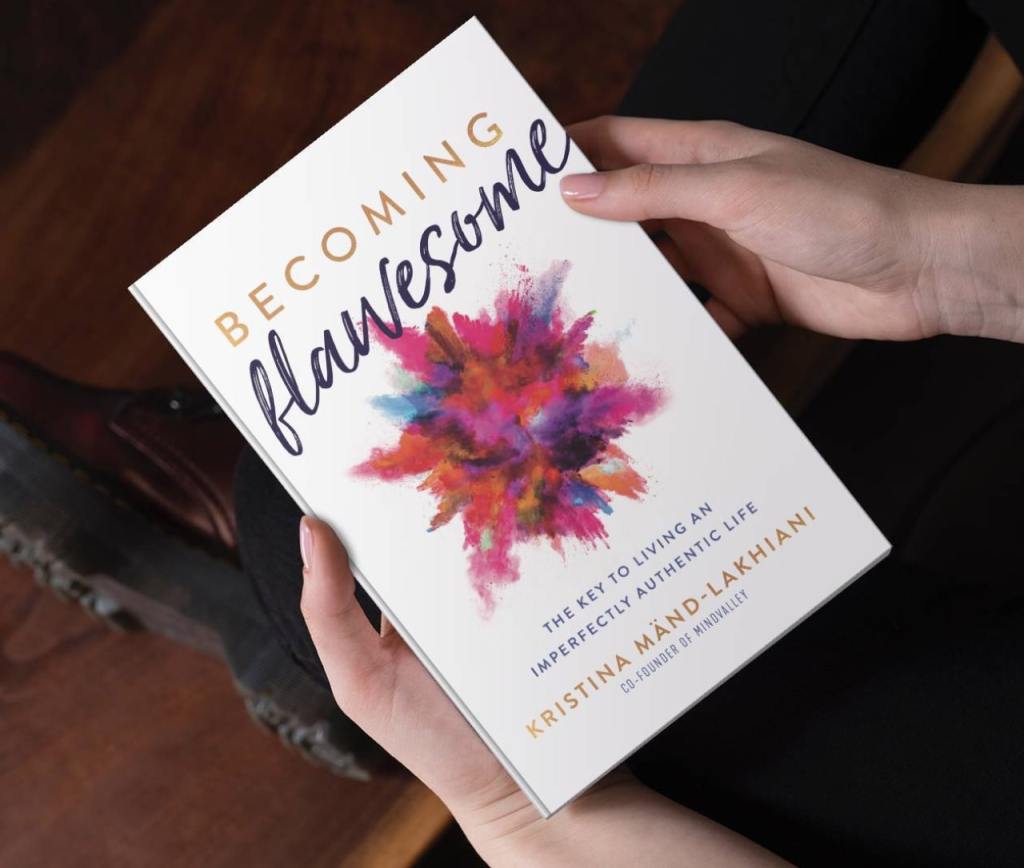
  • Book Review: Becoming Flawsome

    Book Review: Becoming Flawsome

    When I was first given the opportunity to review Becoming Flawsome, I was intrigued. The author, Kristina Mänd-Lakhiani, is the co-founder of Mindvalley, an organization which is, “the world’s most powerful life transformation platform”.

    Becoming Flawsome encourages its readers to, “overcome perfectionism and self-doubt by unapologetically embracing your fully awesome self—flaws and all”. And as I embarked on reading the book, I was hopeful. Who doesn’t want to learn something new about accepting themselves completely?

    Yet as I read, I felt a mix of emotions. Theoretically, I agreed with Mand-Lakhiani’s premise. Yet while reading some sections, I found myself disagreeing with what she had to say. In others, I felt as though she had covered territory that I was already familiar with. And both of these sentiments influenced my perspective on her work.

    Certain chapters such as “Self-Care vs Self Love” may or may not resonate with readers. Therein, Mänd-Lakhiani makes an interesting case for a distinction between the two, noting that, “Self-care is about surviving, while self-love is about thriving.” (192)

    That said, the examples that I’m about to discuss are indicative of some of the issues that I had with this book.

    In the chapter entitled “A New Life” Mänd-Lakhiani tells her readers that, “Your only moral duty is to be happy and at peace with yourself”. Initially, I disagreed with this sentiment. I was concerned that her idea could be interpreted as one that promoted living selfishly. Truly, after a time, doing so can take its toll on your happiness and peace of mind.

    In fact, I spent a portion of that chapter contemplating what the author may have meant regarding people’s “moral duty”. That is, until she eventually touched on the familiar idea that we ought to be careful as we aim to help others, because we can’t pour from an empty cup.

    Those aren’t Mänd-Lakhiani’s exact words. But in self-help circles, they represent a widely-understood sentiment: You cannot hope to adequately help others, without making sure that your essential needs are met first. Yet she took time getting to this point, and once this segment of Becoming Flawsome was through, I found myself wondering why she hadn’t revealed this conclusion sooner.

    Within this chapter, Mänd-Lakhiani also made a rather generalized statement about giving to others: “The world would be so much more of a better place if, instead of giving to charity out of guilt and obligation, we did good out of a sense of justice, unity, equality, and our own level of abundance.” (228) At this point, I couldn’t quite relate to her words. As far as I’m concerned, there are plenty of people who give to others out of love and a sense of altruism. In my mind, that is the norm, as opposed to the negative factors which she mentioned.

    Nevertheless, one of Becoming Flawsome’s most salient points was made on page 188, via a paraphrased statement by Marisa Peer. “You are enough” is a popular sentiment in the self-help arena. And Mänd-Lakhiani wondered whether or not people risked becoming immobile or complacent because they put too much faith in the idea. Yet Peer had another perspective, explaining that “You lie back on your sofa doing nothing, not because you think that you are good enough, but the opposite—you do that because you are afraid that you are not enough. It is a fear of failure, of not being good enough, that prevents you from going out and exposing yourself to the world, doing something courageous and meaningful…” (188)

    In Becoming Flawsome’s final chapters, the author makes a point which I feel overall addressed my journey with this book: “What works for some may not work for others.” (258) Its most fundamental tenet revolves around encouraging readers to develop authentic self-acceptance. Yet this is not an unpopular notion. Hence, if you’ve heard this sort of messaging before, much of Becoming Flawsome may seem familiar.

    Ultimately, I remain divided in my thoughts on this book. Becoming Flawsome touches on some information that falls under the self-help genre’s fundamentals. And when you’re beginning your self-help journey, it can be beneficial to have a basic foundation. Yet if you have already read these types of books, you may find that it covers familiar territory.


    Photo provided by Kristina Mänd-Lakhiani’s team.