Author: Claire

  • Juneteenth: It’s about freedom. Not merch.

    Juneteenth: It’s about freedom. Not merch.

    The story of Juneteenth is an important part of American history: On January 1, 1863, in the United States, Abraham Lincoln signed the Emancipation Proclamation. Yet enslaved Texans did not know that they had been set free until two and a half years later. On June 19, 1865, in Galveston, Texas, Major General Gordon Granger issued General Order Number 3. This document declared what the rest of America knew: Under the law, enslaved Texans were liberated. Since that day, African Americans have been celebrating their ancestors’ freedom. And on June 17, 2021, President Joe Biden made Juneteenth a federal holiday in the United States.

    This year, various companies marketed Juneteenth products to consumers. But some of their items were more well-received than others.

    Efforts such as Walmart’s Juneteenth Ice Cream didn’t fare very well with consumers. People criticized the company and questioned their sincerity.

    Truly, there’s a rift between how some organizations depict Juneteenth, and the way the Black community celebrates it. When a company’s efforts insult their audience, they risk alienating them.   

    Recently I discussed Juneteenth’s commercialization with Black business and communications experts. They offered me insights into what companies can do if they want to genuinely show their support for this revered holiday. The key lies in understanding the true meaning of Juneteenth: To Black Americans, the day is not about merchandise.  

    My Juneteenth series begins with part one of my discussion with Mr. Jason Greer.

    Jason Greer is an internationally recognized Employee/Labor Relations and Diversity Management Consultant who is known as the “Employee Whisperer.” His tremendous ability to get in on the ground in any business allows him to immediately form relationships and improve morale and employer-employee relations. Greer has had incredible success due his background in Labor Relations, counselling psychology, and organizational development. He has more than 17 years in this industry and his company, Greer Consulting, Inc., ranks in the top 5% of labor and employee relations consulting companies in America.

    I started by asking Mr. Greer my signature question.


    Claire Francis Question number one: In the years before Juneteenth became a federal holiday, what did it mean to you?

    Jason Greer – Freedom. And I’ll tell you why.

    Before Juneteenth became Juneteenth, what I was taught was that there’s the Fourth of July, which is America’s day to shoot fireworks, etc. And then there was actually Juneteenth which—[according to] how I was brought up—Juneteenth actually should be America’s holiday, because that’s when everybody was theoretically free.

    When you look at July 4, in terms of it being Independence Day, it meant independence for some, not independence for all. But when you look at Juneteenth, it’s [for] you. It’s right there. It’s factual, its historical. That’s when the slaves were officially free, two years later than when they were theoretically freed in terms of the law. So that’s what it means to me. It’s been interesting to see the evolution of Juneteenth, because it’s sort of taken on a different flavor.

    CFAfter Joe Biden signed the Juneteenth National Independence Day Act last year, did you have any concerns about how the day would be perceived, or anything that would change?

    JG – I don’t know that I had any concerns. I just remember thinking, “This is interesting…” because it was right on the heels of instances of voting rights being under attack. And it sort of felt like “We [the government] won’t give you this, but we’ll give you this…”

    Does that make sense?

    CF It does.

    JG – So, I don’t know that I had any concerns. But I found that the timing was interesting. And my hope was, “Well, no one said that life is fair. So maybe there are still opportunities here for learning, for growth, for an appreciation of a very dark history.” And when I say appreciation, acknowledgement is appreciation. And there was not a formal acknowledgement prior to that moment.

    CF In a sense I guess, it felt like the least officials could do. With Juneteenth becoming an official holiday, I suppose it’s hard not to feel a little bit hopeful when something like that happens.

    JG – And I live in this life: I call it the glass half full, right? Because, on one hand, I’ve heard some people say it was just a consolation prize, but then on the other hand, a consolation prize, historically, was nothing. So from this perspective, Juneteenth’s change in status represents the start of something. And especially within corporate America, I’ve seen some wonderful conversations that have happened as a result of this occasion. Conversations that would not have happened or may not have happened within the next five to 10 years. So for companies and organizations across the board, who are honoring Juneteenth, I think it’s really cool that the government is actually putting some action behind their promises.

    CF Now, I’m going to turn my attention to the commercialization of Juneteenth. Taking a look at retailers, for example, there was that recent controversy over Walmart’s Juneteenth Ice Cream. Considering the issue of commercialization and corporate-based influences, and maybe media influences as well—what are your overall concerns regarding retailers understanding of the holiday?

    JG – Well, what I’ll say is that I wonder if they understand Juneteenth. [Especially] when you see retailers that are doing these Juneteenth displays, and part of their display is watermelon and Kool Aid, and some of the stereotypical food items that are associated with African Americans. I think that’s when we start to run into some issues. But what I would like to see is this: If you’re going to honor Juneteenth, then honor Juneteenth.

    Memorial Day happens every year. And so, because this is America, you can’t get away from the commercialization of anything.

    CF Absolutely.

    JG If there’s an opportunity to make a buck, it’s going to make a buck. But even when you look at Memorial Day sales for furniture stores, or other places, even in their graphics, there’s an acknowledgement of the people who died in defense of our country. So, it’s sort of one of those things where, if you’re going to commercialize it, add some context to it.

    CF Concerning retailers’ attitudes towards Juneteenth, what are some of the things that you think they have done well, or have gotten right?

    JG – I’ll tell you what. I know that Target has caught a lot of flak for some of the items that they put out, in respect to African Americans, especially in respect to Juneteenth. But when you look at their approach to inclusion, they literally have gone to Black designers and brands, giving them opportunities at a high level, that they maybe they would not have received otherwise. So even though maybe some of the delivery was not as favorable as people would have liked it to be, or as culturally sensitive as people would have liked, I think that Target is leading in terms of their approach.

    The fact is that when they get it wrong, they get it wrong, and they acknowledge that they get it wrong. So they fail fast. I think that some organizations that I’m seeing as a whole, again, are really taking Juneteenth seriously.

    And they are going out of their way to bring in speakers. They’re going out of their way to bring in informed subject matter experts. As much [of a] subject matter expert as you can be on the human condition. And they are actively engaging in dialogue about how we can become a more diverse and inclusive workspace.

    CF You mentioned Target and the fact that they use Black designers for their goods and different items that they offer the public. What else do you think people could or should do if they want to celebrate Juneteenth, or show that their company cares about the holiday?

    JG – The first thing is, begin. Just do it. And understand that in doing it, you’re not going to get it right 100% of the time. Because they always say race and politics are those two topics that you generally don’t talk about around the water cooler. But I think at the same time, especially when you consider our country’s complex relationship with race, and class, as well as other social structures, what I would encourage organizations to do is to begin to have conversations. Be open and reflective about what is shared, but also create as non-judgmental of a space as you possibly can.

    Because for all the people who are on board with Juneteenth, there are others who are not on board because maybe it goes against what they personally believe, or maybe they don’t understand it. I read something the other day that said that nearly 30% of white Americans had heard of Juneteenth. Well, that number was over 60% for African Americans.

    According to a Gallup poll, “More than two in three Black Americans (69%) say they have a lot or some knowledge about Juneteenth, compared with 40% of Hispanic Americans and 31% of White Americans.”

    So I think there’s a lot of teaching that can go on as a result of this conversation.

    CF – You’ve brought up a really important point about wanting to have staff informed because you’re trying to educate the public and make customers feel welcome. Regarding Juneteenth, you want to make sure that your company supports those initiatives and objectives from the beginning. And employees need to understand why Juneteenth is important to your customers. But then you also brought up the idea of people who might not understand Juneteenth, or might not be interested, etc.

    I was thinking about how you can start if, say, you’re at a company where only one person is interested in a Juneteenth initiative, and everyone else is saying no. When you talk about beginning, how can people begin? Do you think they should hire diversity consultants?

    JG – Great question. First, do a critical assessment as to whether or not this is something that you want to take on. I think any organization that’s doing diversity just for the sake of diversity, without understanding the responsibility that they have when they introduce diversity into their corporation or organization, is doing themselves a disservice. So understanding that it’s a Federal holiday, we get that part. But if you’re going to introduce conversation around Juneteenth, get subject matter experts.

    Also make sure that if you happen to have African Americans that work for you, that you’re not automatically putting them on the spot to be the subject matter expert on all things Juneteenth. Because the reality is, they might be accountants, they might work in human resources, they might work wherever—they didn’t sign on to be your diversity trainer. Does that make sense?

    CF – Yes. I think sometimes people might be overly eager, or presumptuous, and think, “Oh, you’re Black, you can talk about diversity…” Well, can they? And that brings up the issue that you mentioned: Are they skilled in the area of expertise that’s required?

    JG You know, I was watching this movie called Emergency, on Amazon Prime. I haven’t finished it, so I can’t tell you what it’s all about. But in the beginning of the movie, two young brothers were in a college class. And their white professor walks in, and she says, “Okay, as you might have seen on the syllabus, today might be a bit triggering for many of you, because we’re going to talk about hate speech.” And she introduces the n-word. And she has it spelled out on the board. You see everyone kind of getting uncomfortable. And she continues to say the word but she’s not saying “the n-word”. She’s saying it plainly and using variations of it. And you see the two Black students being uncomfortable. You see the white students around them that are uncomfortable. And then, she finally looks at them and she goes, (paraphrasing) “you know, not to put you two on the spot. But can you argue some clarification as to the [use of the] n-word?” Everybody turned around to look at them.

    I’m bringing that up as an example: Unless your African American employees volunteer for something like this, don’t just automatically assume that they are going to be your Juneteenth spokespeople.

    CF Absolutely. [Note: Discussing racism can be exhausting, traumatizing, and stressful. This is something that needs to be considered when approaching people of color.]

    In your dealings as a labor relations person, regarding employees who want to honor Juneteenth: What, if any, common issues have you noticed across industries, and even companies, related to the recognition of Juneteenth, or other holidays, such as Cinco de Mayo—that are connected to diverse communities?

    JG – What I’ll say is that I remember when MLK Day was introduced. There was this understanding of Dr. King, because he was such a strong historical figure. From a kid’s perspective, because I was in college, there was this idea that, “It’s about time!”. Right?

    I think when you look at a Juneteenth, there’s so little understanding across the board as to what it is. Although there’s acceptance because it’s a federal holiday, there’s still this idea of, “I don’t know exactly what Juneteenth is”. Now, that’s not everybody. But I think there’s still a lot of learning that’s going on.

    And you brought up Cinco de Mayo. You have these historical holidays for groups of people, that mean something to so many folks. I think where people are sometimes disappointed is when something that means so much to them is just theoretical to other people, and there’s not as strong of an embrace as you would have hoped.

    CF So, what do you think can be done to remedy the situation and keep employers informed? Do you think we should have education programs?

    JG – Definitely education. Whether you’re bringing somebody in to speak on Juneteenth… Or, how about this? Google is a powerful tool. And if you can find the details of the Johnny Depp, Amber Heard trial [*laughter*], you can find the details of what goes into Juneteenth. I think there has to be a willingness though.

    CF Willingness, how, though? What do you think people can do about willingness in the workplace looking at not only employees, but of course, whether you’re in a school dealing with administrators, or a corporation with executives: What do you think can be done in order to encourage interest in awareness—getting employers to understand that when you are moving towards understanding and appreciating your diverse employees, you will appreciate their traditions as well?

    JG – I think you just honestly said it, right.

    CF I was also going to ask you about what steps can be taken. You mentioned things like having a speaker come and talk. Yet it’s hard to support the idea of changing hearts and minds, because it’s up to the individual—whether or not they want to be informed about Juneteenth.

    JG – Can I say something? Sometimes it comes down to employees actually going to their employers and saying, “This is what we would like to happen”. Because when you consider Amazon, Amazon makes a big deal of Juneteenth now. They bring in speakers, they bring in entertainers, it’s really, it’s a rockstar-level celebration. But that came from employees saying to Amazon, you don’t honor Juneteenth and we want you to.

    CF Well, that’s good. I’m very glad that that Amazon is accepting of their employees’ desires in that way. On the opposite end of the spectrum, though, it made me wonder what employees might want to do if their employers are resistant to the idea of celebrating Juneteenth.

    JG – The easy answer is to be patient. And continue to sow the seeds internally as to why Juneteenth is important to you, why Juneteenth would be important to the organization. Continue to raise your voice, but be mindful of who you’re raising your voice to. And be consistent. I mean, life is more than just a hashtag that comes and goes. If you believe that this is something that would be good in terms of honoring Juneteenth for the people that you work with, really consider what it says about your organization. Because these days, you have people who they will let you know what they think about your corporate stance based on their willingness to do business with you. Or on the other side of that, their unwillingness to do business with you. 

    And understand that there are going to be consumers who want to do business with companies that honor Juneteenth and make a big deal of it. And there are going to be people on the other side of the equation that who don’t want to do business with you because you honor Juneteenth.

    CF Yes. Now, when you’re looking at Juneteenth and retailers, we can look at two things: There’s the way they treat their employees. And there’s the way they arrange their businesses to serve, or not serve, their customers. So if you have retailers who are set against celebrating Juneteenth, or just haven’t considered it, where do you think retailers misunderstanding of Juneteenth comes from?

    JG – I would say a lack of knowledge, and a general lack of understanding of what Juneteenth means to America. I think that’s one of the aspects of the Juneteenth discussion that we have to be careful of. It’s far too easy to say that it’s a Black holiday, or holiday for Black people, when the reality is that Juneteenth is a holiday for all people. Because, we’re not talking about the abolishment of, you know, yellow Starburst, right?

    I’d say that because I don’t like them. [*laughter*]

    We’re talking about the abolishment of slavery—of human beings, who happen to be Black.  I think that if we can honor [all of] the things that we honor in our country, why wouldn’t we honor something that was a positive step toward human rights?

    CF Yes. Thank you very much. In your answer you made the point about people needing to understand that this is not just a Black holiday. And that made me think of Blackness, and in particular people’s resistance to the idea of it. I couldn’t help but think of how sometimes people think that when something is somehow connected to Black folks, that automatically means that it ought to be disregarded. “Oh, this is [traditionally celebrated by] Black people?” “Oh, no, thank you!”

    That’s certainly something that I think needs to change across the board.

    Looking at my questions… Did we discuss how Juneteenth has been received thus far? What have you noticed?

    JG – I think that there’s some quarters that are very accepting of it. The moment that it was signed into law, they’re like, let’s roll. Right? Let’s, let’s dig into this. I think there are others who are actively resisting it, because of the perception that it’s a Black holiday. And then there are probably a large swath of people who have absolutely no idea what it is. And so there’s not an act of resistance as much as they’re just in the dark as to what it means.

    For the Fourth of July, on social media, we see posts featuring people who are, grilling, they’re doing fireworks, and so on. It’s very a celebratory atmosphere for Fourth of July. It’d be an interesting thing, maybe 20 years from now to see people across the board who are grilling and shooting off fireworks, in that same celebratory mood for Juneteenth. That’s my hope.

    To be continued.

  • Don’t use news to abuse.

    I’ve tried to stay away from social media over the past several weeks. Although I click  on a tweet every now and then when I see it in an article, for the most part, I’ve succeeded. But a few days ago, I noticed that I’ve been drawn to something else. For, although I’ve tried to keep my distance from the Land of Likes, I’ve become a little too fond of my News app.

    Have you ever caught yourself doomscrolling for information on everything from the world’s wars to the weather?

    I have.

    The other day, I asked myself a few questions.

    My addiction to the news is an extension of my addiction to social media. What is being fed in my soul when I’m updating myself on the lives of all these people who have nothing to do with me? How is that actually helping me as an individual adult, alive, here and now?

    Newsflash: It’s not.

    Be careful out there. And above all, be kind to yourself.


    Photo via CreateHER Stock Photos

  • Mind Your Media: Manipulating Martin

    “…I have not said to my people ‘get rid of your discontent’.”

    Dr. Martin Luther King, Junior – Letter from Birmingham City Jail

    Last week on the internet, I noticed someone with a following misinterpreting Dr. Martin Luther King’s words. Since last month was the month of his birth, I shouldn’t have been surprised. 

    And although the person’s speech was grandiloquent their intent was clear: They were trying to cast aspersions on people whose means of pursuing justice doesn’t meet their standards. 

    They were relying on a classic tactic: The general public has very a very positive image of Dr. King. Yet far too many people believe the substance of King’s anti-racist stance can be found in his “I Have a Dream” speech. Although an important piece of oratory, people are prone to focusing on its inspiring imagery. They overlook something that King and his followers know to be true: Racism is not a simple issue, and it cannot be solved via superficial means. 

    In spite of this, many believe that in order to solve racism, people ought to sanitize their language. As far as they’re concerned, people like me must be careful not to offend those who have hurt their fellow humans in the most horrible of ways. 

    Yet if one person abuses another, should they not be made aware of the pain that they have caused?

    Seeing Dr. King’s words used in an attempt to stifle anti-racist activism, at first, I thought of tagging Dr. Bernice King. She is a master at correcting people who manipulate her father’s words. Thankfully, though, I also remembered something else: Last year among other unread books, I had purchased A Testament of Hope. Edited by James A. Washington, Testament is an anthology of Dr. Martin Luther King Jr.’s writings and speeches. 

    This weekend, I began to read the book’s introduction. As I went, I paused. Suddenly, I felt an urge to flip through its pages. I wanted to see if any particular statements caught my eye. And that’s where today’s quote came from.

    Some may woo their audiences with smooth rhetoric. They may try to use statements from Dr. King as a cudgel to degrade Black people. But I want you to know something:

    It is not wrong to be uncomfortable with racism. Never mind the ugly lens that some use to frame the outspoken among us. It is not wrong to want people to do better than be bigoted towards their fellow human beings. 

    Some really believe that people like me ought to be ashamed for wanting things to change. Those individuals want a of sanitized version of the world where those who harm others do not face consequences. 

    As for the words above, I’m thankful for Dr. King. I already knew that works such as his Letter contained sentences that certain people will object to. And in the days to come, I look forward to discovering more of them.


    Photo by Unseen Histories via Unsplash

  • Mind Your Media: The Diversity Double Standard

    Continuing my discussion of how racism is reflected within our media, let me give you a concrete example. There’s a media host whom I’ll call Craig. in the past I’ve seen Craig use his platform to promote someone who can’t grasp the idea of why fetishizing people from within a particular non-white community might be a bad idea. Yet via another outlet, he had absolutely no trouble discussing why women as a whole need to be careful when dealing with men who are strangers to them.

    Similarly, I’ve seen moments on social media where men will defend the hell out of women. Yet concerning race-related issues, either they say nothing, or they easily back down from any defense they may have started to make.

    The incidents that I’m referring to reflect a particular type of hypocrisy that needs to be called out:

    Certain people support justice, regardless of who seeks it. In theory, a lot of people love the idea of being noble and standing up for what’s right. (Who doesn’t love The Hero?)

    Yet I’ve paid attention to what some folks do in practice: They have no trouble with the idea of defending a woman’s honour. (Here, one might ask: Who do they think of as women, or specifically, women that deserve to be held in high regard?) 

    In contrast, when the time comes to stand up for people of colour, the hand wringing begins. In spite of some folks’ claims, there are limits to their unconditional kindness. It’s quite interesting to note: Their chivalrous energy evaporates when the people who need defending are from a group that they might not want to be intimate with.


    Photo by José Léon via Unsplash

  • A Taste of Home

    I haven’t read the article yet. But I feel like seeing Bee Quammie in the Toronto Star has freed me to write this post.

    A few years ago, there was a story in the Star about roti. As a Canadian of Caribbean descent, I was disappointed, and I know that I wasn’t alone. For those of you who do not know, roti is a food staple within Caribbean and South Asian communities. Articles such as this one discuss its origins.

    In hindsight I suppose the contents of the story were meant to be informative. But when it was first published, that’s not how I saw things at all. Instead, to me, it read like a cautionary tale about a dish that people ought to be warned about. Its analysis of one restaurant’s roti spoke ominously of its sodium and caloric content.

    From where I sat as a woman of Bajan and Trinidadian heritage, it felt like it had been written specifically to suggest how unhealthy Caribbean food could be. 

    I am a child of immigrant parents. For many of us, food from our parents’ homelands is one of very few concrete ties we have to our heritage. I feel this especially deeply because I don’t live in the GTA—a place with a large Caribbean-Canadian population.

    At the time the story’s author lived in the same town as me. I ran into her once. Shortly after we met, I told myself that I was going to ask her about what she had written. But I never followed through.

    These days, I tend to believe that people have begun to understand: The way that you write about a culture’s food matters.

    Last year I bought a Trinidadian cookbook. Inside, there are a ton of recipes for me to explore. But do you know what happened to me during my first few weeks with this book?  I became obsessed with making doubles. I even sent photos to one of my cousins. I laughed, and my heart felt lifted as she told me: A family member had jokingly suggested I send her some of what I’d made.

    Sometime last year, I ordered a meal kit from Carib Dish. I cooked something that I’d never even had before: An authentic oxtail dinner. I felt a sense of joy as my mother gave me tips beyond what had been outlined in the instructions.

    I hope that as time goes on, the media continues to contemplate the meaning behind its messages. What happens when they rarely showcase a particular type of cuisine—and then when they do, said cuisine is placed in a negative light? That’s an insult to those who might enjoy it the most. Not only are you mocking what we eat, you are suggesting something awful about those who do the eating.

    Years after that roti story was published, I longed to come up with a story of my own. I wanted to defend and show my love for this dish in a way that hadn’t been done before. 

    The taste of this treasured, filled flatbread soothes my soul as nothing else can. When I eat it, I feel a connection to my ancestors. With every bite, it’s as though they aren’t so far away after all.


    Photo by Usman Yousaf on Unsplash.

  • Mind Your Media: The Grand Misunderstanding 

    Sometime in January, a thought came to mind:

    Privilege may yield power, but it doesn’t automatically bring knowledge. 

    – Claire

    A few years ago I interviewed a white female professor for a diversity-driven story. Dr. Shelly Tochluk is an expert on challenging white people’s perspectives on bigotry. And she explained something to me about why some Caucasians are so defensive when attempting to tackle racism.

    Our conversation centred on allyship. The following is an excerpt from her answer to my question, “Suppose a white person claims that they’re genuinely interested in combating racism. What’s one of the most critical things that they need to [realize]?”

    “White people are conditioned to see ourselves as competent, as people who can get things done. We hear that we need to end racism. We hear that white people need to do something. We think we’re supposed to jump in and take charge. We are often like bulls in a china shop. We need to first understand how little we actually know at the beginning. Listening and learning are important.”

    When confronted with race-related situations, due to their biases, some white people risk making wrong assumptions. They may misunderstand the gravity of the circumstances involved, as well as their potential psychological impact.

    A white person may be aware that racism is wrong. But that doesn’t guarantee that they have an inherent understanding of how to dismantle it. Nevertheless, some of them choose to ignore this fact. They assume because they have Black colleagues, friends, or connections, that by association they possess knowledge of what constitutes racist circumstances or behaviour.

    Furthermore, some think that all it takes is associating with Black people to guarantee that they will approach the subject with the appropriate amount of sensitivity. Yet it doesn’t. Especially when they don’t think it requires any.


    The Lure of Lackadaisical Dialogue

    “I don’t burn crosses on people’s lawns. I don’t use racial slurs. What’s the problem?” That’s where some people’s idea of what constitutes racism begins and ends. And it’s especially troubling when those who think this way have impressionable audiences.

    This is the crux of my concerns: People need to pay attention to perspectives that are expressed in the media they consume. Said perspectives can colour their perception of legitimate problems and affect their real-life interactions with those who have a different point of view.

    In the current news cycle, misinformation is being discussed quite a bit. However, much of the dialogue is surrounding COVID 19. Yet there’s harm that can come from the willful consumption of misinformation as it relates to other issues. Among them, racism.

    And how does the idea of misinformation about racism reveal itself in the media?

    It shows up in how people view diversity-related subjects: They seek deeper levels of education on issues when they believe they need to. They do not pursue knowledge about things that they think they’re competent in.

    And certain media figures speak ignorantly about the pursuit of justice. Yet as they do so, they convey a sort of confidence. They genuinely believe their assertions, in spite of evidence that it would behoove them to educate themselves about their subject matter.

    They simply don’t understand what’s at stake. And yet they do things such as make inane comments, believing they’re being insightful or even entertaining.

    After all, everyone should just love each other. Why can’t people just get past their frustrations?

    In a perfect world, yes. But…

    Overall, they seem to prefer a simple approach to important issues. And they regard people who are too thorough as troublemakers.

    But quite frankly, racism isn’t something that persists simply because Black people refuse to get over themselves.

    Forget racism for a second. We could be talking about almost any other subject that deserves to be treated with nuance and depth. 

    The fact of the matter is that some people ingest what these media figures are saying—not because they’re actually right. But rather, because they have a likability factor. These people are telling them what they want to hear. They provide an ego-driven refuge of sorts.

    There’s something some audiences find reassuring in believing that things out there aren’t as bad as “those people” say it is. Even if you don’t think of yourself as an “us vs them” type of person, consider the possibility that you harbour some unconscious biases. Your determination to commit to a skeptical perspective can have broader implications related to things such as how you process information as being either true or false. 

    But where was I?

    For some, skepticism towards “those people” is where the conspiracy theories kick in:

    The Others keep insisting that Such and Such is awful. But that can’t be true. Surely, it’s a part of their Great Plan to do XYZ to us.” 

    And their response to The Others?:

    Come on in, the water’s fine. And you don’t know what you’re talking about.

    Meanwhile, those who are vulnerable are saying “We need help….” And another problem arises from that, because the help that some of us are asking for doesn’t actually begin with help. Rather, it starts with a request for a change in attitude on the part of those who insist that people who point out things such as injustice are lying. And a change in attitude begins with vulnerability, as well as a willingness to consider a change in thinking.

    For many, this is too unnerving. 

    But do you know what else is unnerving? The perspectives that some have come to take as gospel.

    I will not use an exact quote. But, among other things, I once heard a popular pundit claim that those who protest against inequity and injustice are imagining things. He was adamant about it. In fact, as he went on, he was, essentially, insisting that those who long for justice—and aren’t silent about it—aren’t in their right minds. 

    More concerning, though, there is the fact that this person is someone who has repeatedly been promoted by someone else, who has an even more popular platform. And their audiences believe what they say.

    Powerful people are talking about racism in a trivial way. Do they care about the impact of their words?

    I mean really. How are people who are committed to following these media figures’ ideas processing their perspectives? What are they doing with what they learn from these people?

    When I think of the consequences, I’m not only considering vulnerable people. 

    What happens after you put your faith in a certain type of media’s messaging, and adopt their worldview as your own? When your favourite media people insist on believing that serious issues are simple, how does that affect your interactions in the real world? What are your relationships like with people who aren’t like you?

    I’ll be honest. When you insist on adopting a superficial attitude towards serious things, that doesn’t instill confidence in you. In fact, it can make you seem ignorant and inconsiderate. Here, I’m not critiquing you for the sake of being cruel. 

    Those adjectives suggest a damaging impact on your relationships—both individually, and with humanity at large. That type of outlook will also undoubtedly affect your ability to understand other people. 

    Imagine someone in your circle comes to you, sharing their feelings about a racist encounter or incident. They could be anything from hurt, to angry, to frightened. But most likely, a mixture of all three.

    How do you respond? Do you take them seriously? 

    If you ardently absorb a certain kind of popular media, likely not. Chances are, you’ll dismiss your contact as being hyperbolic or hysterical. Their concerns aren’t worth listening to.

    After all, your media gurus say so.

    Please know that I’m speaking from experience, and I’m sure I’m not alone. Time and again, legitimate concerns are met with what may as well be laughter. It’s a frustrating, fatiguing cycle. It’s a battle that seems impossible to win. And it’s one that many of us are tired of repeatedly fighting.

    Here’s something for the skeptics to consider: You may understand where Your Favourite Media Figure is coming from on a topic. And they may very well have a prominent platform. But that doesn’t guarantee that what they are saying about their subject matter is actually correct.

    At the end of the day, it’s not realistic to expect a difficult, nuanced subject to be simple just because you want it to be.

    And a simplistic approach to real-world problems is harmful. As I think about how I long to engage an audience, I’m aware of the following: Some might be more sympathetic towards issues that don’t affect them if I demonstrated some restraint. To them, I suppose it would be more palatable if I adjusted my language. It might be better if I said that adopting a mistrustful approach towards the outcry against injustice was “unproductive”. But people like me can’t afford to mince words. There’s far too much at risk. 


    Photos by Conner Baker, Nadine Shaabana, Jassir Jonis, José Léon, and Ayo Ogunseinde.

  • Will: The Review

    Now this is a story

    all about how

    destiny, it took a player

    straight out to Tinsel Town.

    He grew right up 

    a superstar,

    a man beyond compare.

    Philly raised—but some first saw him

    as the Prince of Bel Air.

    Will Smith’s story has a before and after, of course. But as I read Will, the Fresh Prince theme kept coming to my head.

    Written by Will Smith with the help of Mark MansonWill is a study in success. I honestly enjoyed it. As I read it, I found it hard not to naturally hear Will Smith’s voice in my head. The only thing that would have made my experience better is if I’d picked up the audio version. 

    Speaking of audio, I couldn’t resist sharing this…

    Within Will‘s pages you’ll learn Will’s history, from his humble—and at times strained—beginnings in Philadelphia. And of course, you’ll learn the truth behind the highs and lows of Will’s career. 

    Most notably there’s the story of how he became The Fresh Prince of Bel Air. Will’s already talked about it on YouTube. But Heaven knows, as a reader, Quincy Jones’ “NO PARALYSIS THROUGH ANALYSIS!!” left a mark. How many magical opportunities do we kill each and every day through overthinking?

    You will read about Will’s family life, including his marriage. If—when someone mentions Will and Jada—salacious, TMZ-fueled ideas come to mind, get them out of your head. Apart from one brief allusion to sexytime, in Will, Will shares some genuinely impactful insigts from his and Jada’s relationship.  

    You’ll ultimately learn how he met Scoty—a Trinidadian friend who’s appeared in Will’s videos. The revelations from Will’s time in the Caribbean warmed my heart. They also sparked my curiosity. Will’s description of his island epiphanies and encounters drew me in.  And as someone with Trinidadian heritage, I genuinely enjoyed reading about places that I need to explore. 

    In the latter half of the book, there’s a point where Smith’s ideas may leave you thinking about the role that your soul plays in success. Some people are addicted to a sort of superficial ambition. Under that mindset, pride rules, and the idea of surrender tends to be viewed as a sign of cowardice. Yet Will discusses the idea in an incredibly authentic, thoughtful way. I was thankful that he seized the opportunity to demystify such a grossly misunderstood subject.

    Overall Will is written with heart and authenticity. While reading it, I couldn’t help but think of things such as the importance of focusing as you pursue your goals, determination, spirituality, sacrifice, vulnerability, and more. It isn’t every day you encounter a helluva ride in the form of words that truly inspire introspection.

    And I’m thankful for the chance to have read them.

  • Blog Backlog?

    Image by Peter Pryharski on Unsplash

    Dear Reader(s),

    The past few years have been interesting. I’ve had a lot to say about some of my favourite subjects. Although I’ve tried other platforms, I’ve done most of my writing offline and kept it to myself.

    The brave part of me wants to throw caution to the wind and share everything—or at least as much as I can. Yet the frightened part of me insists on doing nothing.

    Thankfully, I know I wasn’t meant to keep my words to myself. At the very least, I owe you a ton of book reviews. Not sharing my work has felt like a burden. And in the days to come, I hope to set myself free.

  • Suicide & Spirituality: A review of something unexpected

    Please note, the book featured in this review discusses sensitive material.

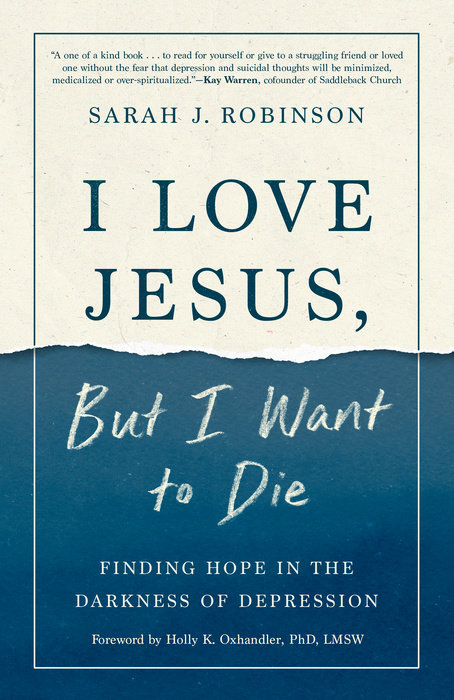
    In I Love Jesus, But I Want to Die, Sarah J. Robinson offers readers an honest, perspective on wrestling with mental health challenges when you’re a person of faith. Specifically, she shares her experiences as someone who has dealt with depression and suicidal thoughts.

    I’m thankful that Robinson discusses medication and therapy in a positive light. In certain religious circles, when mental health issues arise, people like to tell others to “pray on it”—and nothing more. Yet believing in God doesn’t always seem like enough to ease a person’s pain. Not when human beings need solutions for the challenges in our very real, very human lives. As someone who believes in God, I also believe that He provided human beings with the ability to produce mental health supports such as qualified therapists and medication. We have every right to pursue them when necessary.

    I Love Jesus, But I Want to Die was somewhat painful for me to read. But it was also quite beautiful. Above all, I’m thankful for the fact that it takes a thoughtful approach to mental health challenges. People in the church who are and are not affected by these issues should definitely give it a read.

  • Read It!: The Making of Biblical Womanhood

    In The Making of Biblical Womanhood: How the Subjugation of Women Became the Gospel Truth, Beth Allison Barr takes a stand against the Evangelical status quo’s ideas regarding Biblical femininity. An Evangelical herself, she confronts a truth many are intent on ignoring: men’s power in certain churches rests on folks’ commitment to misinterpreting scriptures. The truth has the power to change religious power structures, and for many, this reality remains uncomfortable.

    As a Medieval scholar and professor, Barr’s perspective is solid. She’s aware of the Bible’s context. She acknowledges the way that both the scriptures and women’s leadership within the church were perceived throughout history. Her evidence-based argument is compelling. At this point those who choose to ignore it seem to have nothing logical to stand on other than their commitment to biased thinking regarding women who love the Lord and have been gifted to lead others.

    If you’re tired of religious-based lies related to women, there’s no doubt that you’ll find this a refreshing read.