Tag: equity

  • What is “Black identifying”?

    What is “Black identifying”?

    Really. I feel like I need an answer to this question. And if anyone knows who might have some answers, please tell me.

    I’ll also admit my ignorance: The premise for this post is an honest question. Therefore, if “Black identifying” is an older term with a respected history, I apologize. Yet I’ve heard it only in a contemporary context, and I can’t help but consider how it might be manipulated.

    Where I first heard the words

    A few weeks ago marked the second time I’d heard a Black person use the words “Black identifying” in reference to other Black people–during a radio interview. The first time was on TV, surrounding the dustup over the National Arts Centre’s Black Out Night. After both instances, I felt uncomfortable.

    There’s a part of me that wants to believe that “Black identifying” is a phrase that emerged out of a desire to welcome people of various complexions who have African ancestry. Yet regardless of its origins, I fear that its use will open the door to people who engage in blackfishing and other forms of race-based mockery.

    Overall I wonder why we need to use this term. And who decided that there was something wrong with just saying “Black”? 

    And just how did “Black identifying” come into the public lexicon? Was it because of an over-extension of certain Black folks’ desire to be inclusive or accepted by others?

    “Black identifying” – Beginnings?

    To ask it in another way, who coined this word? Who decided to view the signifier “Black’ as something vague or offensive–so much so that it needs to be changed? And if they think that Black needs to be modified, then why, and for whom?

    At this point I honestly don’t even feel like looking up a definition. If I try, I think I’ll probably end up finding something that’ll make me go, “So, you actually mean to say Black, but…?” 

    My concern is that a push to use “Black identifying” feeds into the idea that using “Black” as a racial identifier–regardless of how accurate it is-is somehow offensive. There are people out there who insist on twisting notions of Blackness, and view them as signifiers that are designed to restrict or otherwise intimidate others. It feels as though “identifying” has been brought in to soften Black’s potentially drastic impact. (Yet “drastic” for whom?)

    Meanwhile, although some may find frank talk about Black folks troubling, I’m afraid I’m sorry not sorry. If a circumstance concerns Black people, I’m going to tell it like it is. Why lie and say that I’m referring to Latinos or Indigenous people?

    The cultural tensions that we are experiencing within society aren’t happening because people are merely being honest about their lives and experiences. They come from certain folks’ determination to cast such truth-telling in a negative light. Just because a conversation is uncomfortable, that does not automatically mean that it is bad. And yet, time and again I’ve seen expressions of Blackness interpreted as a threat or an attack. It’s tiring and deeply unnecessary.

    The Heart of the Matter

    Quite frankly, the first thing, or rather person that came to mind when I heard “Black identifying” is Rachel Dolezal. For those of you who don’t know or remember, years ago Ms Dolezal was in the news. Throughout a portion of her adulthood, she claimed to be Black, and even did her best to disguise herself accordingly using extensions and makeup. Her scheme was successful for a while. And yet it was ruined after her parents verified that she was actually Caucasian.

    I mentioned “blackfishing” beforehand, and I feel the need to expand on my concerns. 

    It’s hard for me to keep from wondering: Do some of the people who use the words “Black identifying” think that being is Black a form of amusement, something that everyone gets to play at? In some way, to me, it sounds like whoever invented that phrase is trying to extend a hand to certain people who aren’t actually Black. I can almost hear them trying to reassure someone, saying, “It’s okay. You can be Black, too.”

    It’s as though they’re encouraging people to be delusional about something that people like me don’t have a choice about–and that something is a vulnerable status, given the existence of racism within our society. Those who wish to engage in being trans-racial–another term that’s fraught with its own issues–are taking advantage of a choice that actual Black people do not have.

    As alluded to earlier, another small part of me wonders if the use of “Black identifying” has anything to do with the at-times complicated relationship that can exist between a person’s Black ancestry and their physical appearance. Are people trying to make those who hesitate to lean into their Black heritage feel comfortable? 

    That doesn’t sit well with me. Even if at first glance, someone doesn’t look as though they are Black, they know their ancestry. Meaning that most people know if they’re Black or not. And unless someone is engaging in some Dolezal-level deception, most Black people don’t have a problem with people of various hues who choose to claim their roots. 

    Hence, I’m willing to question the use and actual usefulness of “Black identifying”. In spite of any potentially innocent origins, I am concerned. Black people tend to know who they (we) are. So who is it really for?


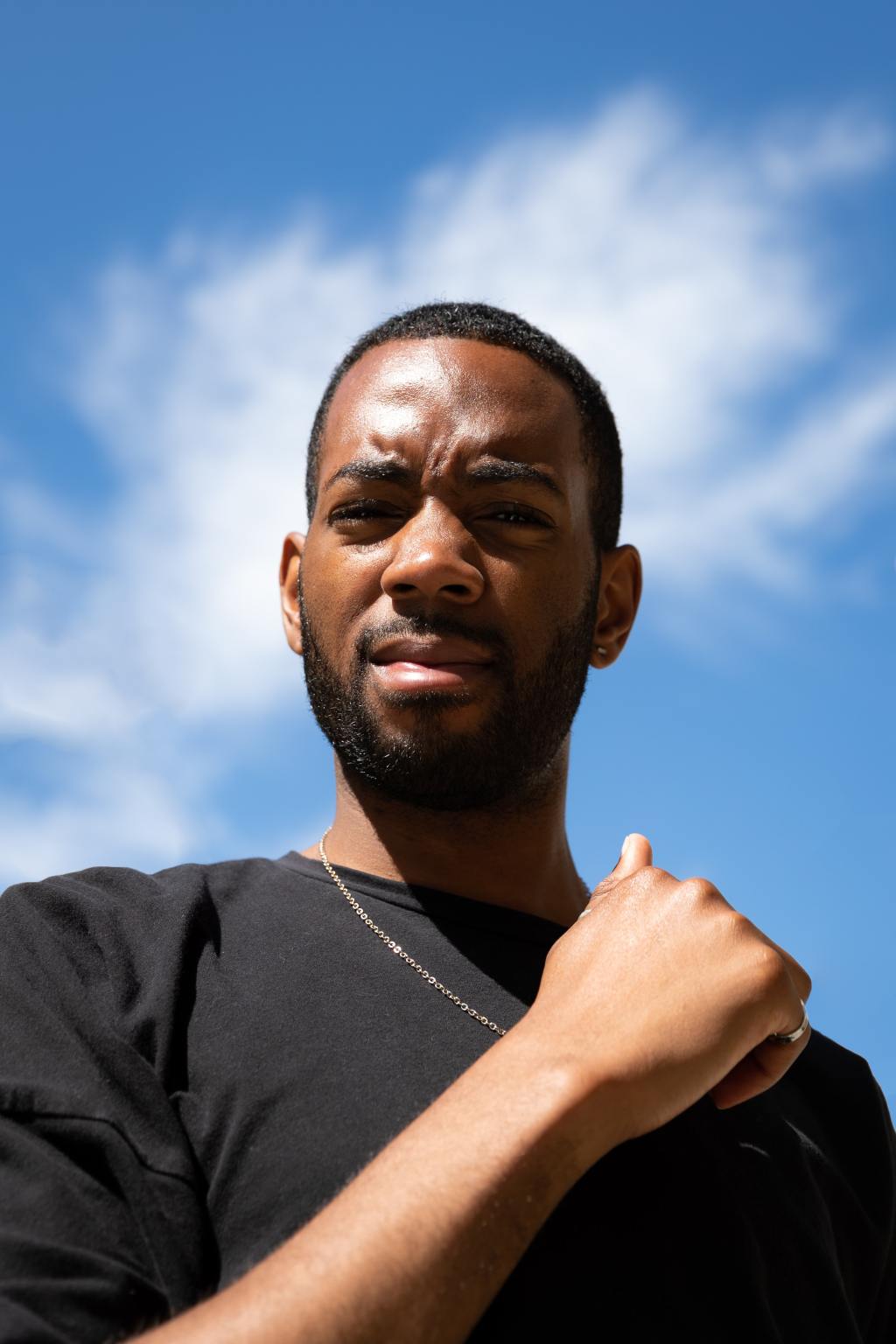
    Image via Tandem X Visuals on Unsplash

  • On Compassion

    On Compassion

    Just FYI: My next interview starts off with a question that uses this word. I was inspired to write this post because I wanted to address something that’s been lurking in the atmosphere.

    Let’s start things off off with a definition.

    According to Merriam-Webster, compassion is a “sympathetic  consciousness of others’ distress together with a desire to alleviate it.”

    These days I’ve noticed that if you suggest that certain people deserve a bit more grace than folks are typically given, some people respond with fear, annoyance, or even disgust.  Although I could feel this attitude in the air for the longest while, at first, I couldn’t place its source. I once mused to a friend, “Why do some men act as though if they’re compassionate, they’re going to lose their [insert vital organ here]?”

    And then, one day, I saw it. Proof that a popular media personality believes that compassion is detrimental. Long story short, they seemed pretty convinced that compassion is corrosive. In fact, they argued with such conviction, I couldn’t help but believe they had been railing against the supposed evils of compassion for a long time.

    This concerns me deeply. Furthermore, the idea of distorting the definition of compassion caused me to think of the impact of what doing such a thing could have on society. How much harm can be caused by misrepresenting something that is not only perfectly normal, but an important part of the human experience?

    I’m bothered because it isn’t only that certain people have bad ideas. My antennae goes up when I notice that these people who have bad ideas have large audiences. Their audiences tend to believe what their leaders tell them. The next thing you know, these people’s ideas have an influence on how their audience members interact with others.  

    And what happens when you insist on putting your trust in bad (incorrect) information? Misunderstandings and needless conflicts.

    “But I pledged my allegiance to Bro Code. How could it possibly fail me?”

    It does. It can. It has. And it will.

    In the past, I’ve attempted to discuss serious race-related issues with people that I’ve otherwise respected, only to be met with ignorance and dismissiveness. Stunned, at first, I wondered why. Their attitudes didn’t match what I thought I knew of them.

    Yet after observing certain media gurus’ output, I don’t wonder any longer.

    What hope does humanity have of getting rid of bigotry when those with an upper hand in society have role models who paint essential human traits in a negative light?

    The Surrendered Intellect

    No one is an expert on everything.

    It’s widely accepted that different people are going to know more than others about different subjects. This is true simply because of who we are and our various lived experiences. And do you know what? It’s okay.

    We understand this regarding certain professions. You can’t fix your car yourself unless you’ve been trained to do so.

    We understand this related to sex. Due to our firsthand knowledge, women know more about pregnancy than men.

    Yet on race, some white people follow a different pattern: They rush to assert themselves, confident that they know more than people of colour about whether something is actually racist or not. I’ve discussed this before.

    Sometimes I think about why this happens. I keep thinking that someone should tell these folks: It’s okay to not speak because you lack knowledge on a subject. Especially when misunderstanding something can affect people’s quality of life, or even safety.

    Still, certain media gurus attempt to prove how much of an authority they are on everything—including race. I’ve noticed that they may even share their platforms with so-called experts who share their incorrect points of view. Sometimes, these “experts” are even people of color who claim that problems with racism are grossly exaggerated.

    And in return? Their audience hangs on their words. I once tried to consider why people remain devoted to such individuals.

    I suppose it can be fun to listen to your heroes. You may believe in them, and therefore, believe that whenever they speak or present something (or someone) to you, you’re getting the straight scoop on the real heart of an issue. But here’s the kicker: When you’re consistently given flawed information, the trust that you place in your idols isn’t wisely invested. Faith in paranoia-driven, dishonest rhetoric doesn’t put you on an inside track. It actually derails your–and society’s–progress.

    If you’ve read this far and still insist that I’m wrong, what’s your end game? As you make your way through this world, who is it that you want to get along with? Is it ONLY people who look and think like you–and the people who agree with them, without question?

    What you choose to believe about the world and the people in it taints your understanding of society. It also harms your relationships with others. I know that some people listen to certain gurus because they’ve bought into the lie that doing so will make their lives better. But if you choose to believe incorrect information, are you really at an advantage?

    Someone who shares their thoughts with the world may be famous. But that does not guarantee that their ideas are correct.

    How does this relate to compassion?

    We live in the real world. And in the real world, we have to grapple with negative issues. When we interact with others, as we attempt to resolve conflicts, it’s normal to want to reach positive outcomes. And in order for this to happen, a sense of compassion, or the ability to be compassionate towards others, is useful. Especially regarding sensitive subjects.

    You can’t use cold, faux-reasoning to resolve legitimate issues. Whoever taught you this is lying.

    Writing those last sentences made me cringe as I realize something. The same people who disregard compassion are also taught not to take various forms of prejudice seriously.

    I can imagine the warnings that such folks give to others: “Don’t be compassionate! That’s how they get you!!”

    What’s the mindset behind this sort of thing? “It’s better to be a cold, wannabe-intellectual, than a sensitive, vulnerable human being”?

    If you’ve answered “yes” to that question, why?

    Such a model of humanity is not sustainable, or realistic.

    Let’s extend this discussion to reference masculinity. The perspective that I’m referring to is often promoted by male public figures to their predominantly male audiences. Men’s perspectives are also important because of their broader influence on the entire world.

    When I think of stereotypically manly things that I appreciate, certain traits come to mind.

    But have you considered something? Sensitivity and depth are attractive. Both platonically, and romantically. As characteristics go, they suggest good things, such as the likelihood that someone is trustworthy. And isn’t that a good thing?

    Meanwhile, those aspects of your personality can’t function properly if you’re busy attempting to mimic an overly-stoic robot.

    So why, exactly, do certain people insist on resisting compassion? From what I’ve seen, they believe that it comes with consequences.

    There’s that old myth: The idea that you’re less of a (hu)man if you’re too compassionate or sensitive. Yet it’s a myth for a reason.

    I’ve even seen people suggest that those who pursue equity secretly have bad intentions. Yet there’s a difference between getting someone to understand why bigotry is bad, and maliciously manipulating them.  The latter is not something that interests people. It isn’t in any normal individual’s playbook.

    Sadly, though, some are so eager to hang onto bigoted points of view that they insist on painting people of color as villains, no matter what we do.

    That mindset is more than tiresome. It’s a road that leads to nowhere.

    A Word About Your Black (or [Insert Human Difference Here]) Friends

    Let’s get back to something that I mentioned earlier: The times when I’ve been surprised by people’s strange attitudes about racism.

    Looking back on those encounters, this year, I started to wonder: How likely is it that these people have ever had a serious, deep, honest conversation about racism with their Black friends?

    And I’m not talking about chats on the type of bigotry that hits the headlines. It’s easy for most people to see that those instances are dehumanizing.

    I’m referring to racism in all its multifaceted, nuanced glory.

    There are racist incidents that never appear on your favourite news channel. And when it comes to eliminating those, some people don’t want to face the truth: Stopping regular, everyday racism involves changing people’s ingrained mindsets and behaviour through education, and practice.   

    Yet as one Dear Relative has reminded me, ignorance is a choice. One of the reasons that our society is facing today’s challenges is because certain people have consciously decided to ignore reality as others experience it.

    You can choose to believe your Black friends when we say that Incident or Behaviour X hurts or is racist. Or you can believe that we are lying. (I was going to say “exaggerating”. But suppose someone has experienced something awful and tells you. And in response, you tell them that they are exaggerating. What do you actually mean?)

    What is the actual consequence of believing that people are being honest about the pain that racism causes? Why do people act as though it is bad to do so?

    You can choose to explore books and other resources that offer honest depictions of how sinister and pervasive racism is. Or you can turn your attention to those that deny it.

    And the deniers are clever. But faux intellectualism can’t obscure the truth.

    Racism is real. Trivializing the hardships of people that you claim to care about isn’t helpful. You may get along well with a person of colour. And that’s lovely. But if you deny the veracity of our concerns about things that leave us vulnerable, then your devotion is superficial.


    Photo via Josue Escoto on Unsplash. I copied the Racism Iceberg from a source who found it here.