Author: Claire

  • “Hollow” Hope?

    *Apparently this post’s title was a sign. Only a few hours after I published it, I learned about Nicole Beharie’s latest role.

    Over the weekend I read this article. Well, not all of it. I skimmed my way over to the section about Sleepy Hollow.

    sleepyhollowabbieforward

    Take a look:

    Fox has Sleepy Hollow, which recently ended its third season with a shocking finale that saw one of its leads die. While nowhere near the ratings highs of the first season, Sleepy Hollow has a following, logs solid DVR gains, and, because of the famous underlying property, the series makes money for Fox internationally, so getting to four seasons would be financially beneficial for the company.

    While Sleepy Hollow is on the bubble, there had been positive signs, and I hear the studio has been doing contingent staffing moves to be prepared in case the series is renewed.


    That blurb may contain industry gossip, but it warmed the cockles of my slowly-aging heart. As much as I love Abbie Mills, showbusiness is still a business. The decisions made at Sleepy Hollow affect its studio’s bottom line. It hurts me to think that that’s the only reason someone at Fox might be reconsidering their actions.

    Ultimately, though, I’m content with the idea of things being rearranged. Sometimes a business has to change its staff in order to improve.

    In my opinion, a staffer’s ability “get” a show should be taken just as seriously as their professional qualifications–if not more. Their decisions can end up affecting TPTB’s end product, for better or for worse.

    Also, as a fan, it’s hard not to notice something about Sleepy Hollow‘s actors.

    That video is one of many. From what I’ve seen, the SH cast adores each other.

    It’s easier said than done. But I find it hard not to wish TPTB could capture the same level of synergy behind the scenes. Hell, forget synergy. They just need people who have respect for the program’s vision.

    *This post has been slightly edited to clarify my thoughts.

  • This week on Underground

    Log line: Innocence is lost when children are forced to face the harsh realities of the world.

    My first impression? I love the kids on Underground. I can’t wait to see what’s revealed as this episode shows us more of their talent.

    Also, I wanted to talk for a minute about the characters as a whole. I really love the fact that none of them seem to embody the tropes that you’d normally associate with a period slave drama. Whether it’s Rosalee’s ingenuity or Noah’s determination, the protagonists make me proud. (Don’t even get me started on Pearly Mae! I still miss her.)

    Underground marks the first time I’ve seen slaves not merely depicted as slaves. Instead, they’re just what folks who work on the show have called them: Enslaved  human beings. I’m inspired by their passion. They remain strong and ambitious in their pursuit of freedom.

    And then there are Underground‘s villains. From his first scene the last episode, I couldn’t help but give Tom Macon a double take. Usually slave masters are shown as being one-note, evil people. This makes sense; I can’t imagine showing someone who owns human beings in a positive light.  But in episode 6, I was taken aback. “Is it me,” I wondered,”or is this man the most insecure person I’ve ever seen?”

    I look forward to watching Mr. Macon unravel. Or die.* Whichever comes first.


    *I’ve kept my eye on the cast’s social media accounts. The man who plays Tom (Reed Diamond) is used to being killed off.

  • And not a lie was told.

    As I listened to the Black Girl Nerds podcast yesterday, I felt inspired to say something more about Sleepy Hollow‘s latest episode. I agree with the point made at around the 35-minute mark. I firmly believe that there’s a lot that is not being said by people behind the scenes of this show.

    One of the reasons I wrote about writers at the beginning of my last post is because I was thinking of something I once read that was casually said by someone on Sleepy Hollow‘s staff. I’m convinced that there’s more to what happened over the show’s lifespan than what’s been shared with the public.

    Which brings me to another point connected to what the BGN ladies were saying. When I feel disrespected as a consumer,  or in this case, a fan of something…I prefer honesty over defensiveness. Every. Single. Time.

    For more truth-telling, check out this episode of Afterbuzz TV. 

  • Sad about Sleepy.

    Sleepy-Hollow-Season-3PosterThese are my thoughts on the latest episode of Sleepy Hollow. If you haven’t seen it, here’s a recap.

    Note: I keep tweaking this post. As I said on Twitter, when I write angry, I can sound like a stuffy English textbook.

    Preface: A Word About Writing

    In response to a tweet about the latest happenings on Sleepy Hollow, I said that I didn’t have any faith in TPTB (aka The Powers That Be) behind the show–its producers, writers, etc. Then I deleted my words. Quite frankly, I felt I needed to revise what I’d said. Yes, I’m angry about what happened to Nicole Beharie‘s Abbie Mills, but I have a hunch that the details involved are more complicated than what some viewers believe.

    A TV writer’s work can be dictated by anyone from a showrunner to an executive who hasn’t written a script since God knows when–if at all. Not to mention that I’ve seen at least two messages that have left me thinking that there’s more to the current state of Sleepy Hollow than what the public has been told.

    Who knows?

    Maybe I’ve put too much faith in the folks who work behind the scenes, but I can’t help but think of what an instructor of mine once said: “This is television writing. If you want complete control over what happens to your characters, write books.”

    And even then, I books have editors.

    Now for the heart of the matter.

    Saving Grace…Abigail Mills

    Since Friday night, I’ve seen #CancelSleepyHollow in the Twitterverse.

    I’ll tell you something though.

    I don’t want this show cancelled. I want it fixed.

    Let’s start with an honest understanding of why people enjoyed Sleepy Hollow. I’ll begin by sharing how I began to watch.

    I have hazy memories of when I first got drawn into watching. It might have been because of a commercial. Or perhaps a message on my twitter timeline. Either way, I was curious. Sci-Fi/Fantasy programming that was well written, and one of the leads was someone who looked like me? I had to check it out!

    I found the first season’s episodes online. I think it took me a whole weekend to whip my way through them.

    When I watch a show, I can tell you that I don’t look at it merely as a viewer. I take it in as a whole, and consider how it was produced and by whom. As I scanned the show’s credits, I was impressed. I didn’t recognize everyone, but I knew Ken Olin, Roberto Orci and Alex Kurtzman. I’ve seen their work before. And though I slacked off in my watching over the past year or so, I figured the show was in good hands.

    That is, until its latest development.

    There was never any doubt in my mind about the importance of Nicole Beharie’s Abbie Mills. Still, a part of me wondered how she was perceived behind the scenes. In the days following the character’s demise I didn’t have to look very far for a clue.

    “…I recently went to Comic Con in London. I was invited without the white male counterpart in my cast, and it was packed. And they knew that it was just going to be me. That shook me…I’ve always been told and I believed that this doesn’t work without him.” – Nicole Beharie (emphasis added)

    Feel free to watch the video that features this quote. 

    For a while, I’d suspected that someone who works on Sleepy Hollow misunderstood why people loved it so much. However Ms. Beharie’s words made it plain. Let me clarify my take on what made the show special: To some degree, whomever had been speaking to Nicole was right. In the world of the show, Abbie and Crane are an irreplaceable pair. I know that I’m not alone when I say that I have absolutely no interest in an iteration of Sleepy Hollow without both Tom Mison and Nicole Beharie as the series’ leads.

    However, when it comes to real-world appreciation of the show as a whole, it’s a mistake to underestimate Nicole Beharie. She has her own, unique power. She alone is the reason that a significant portion of Sleepy Hollow’s audience began to watch the series–including me. A talented Black woman playing a real person (NOT a trope), who’s a lead character in a sci-fi series is not an occurrence that should be overlooked. It should be celebrated. Yet it’s clear to me that at least one person behind Sleepy Hollow has no idea how important and meaningful Ms. Beharie’s Abbie has been to many, MANY people.

    The so-called influence of the white male fanboy archetype needs to die. It’s a myth. I feel as though someone was banking on the fact that because Sleepy Hollow merged science fiction and fantasy, only stereotypical viewers of these genres were watching. Or, that only their attention was worth having. They couldn’t have been more wrong.

    Here’s the thing. Those who watch TV and truly value diversity are comfortable with seeing it beyond the walls of ShondaLand. People of all colours and cultures enjoy fantasy and science fiction. More significantly, Black people, people of color, and women–and those who appreciate us–have the power to make a show like Sleepy Hollow a hit.

    Which brings me to my next topic: The show’s ratings. When I first thought about writing this post, I had a theory about which season was Sleepy Hollow’s best. I verified it via Google. There’s no doubt in my mind why people enjoyed this show’s beginning. It had a winning formula.

    Diversity Inclusion + Deft Storytelling + Flawless Science Fiction

    …In the eyes of many, this equaled must-see TV.

    Take a moment and think seriously about Sleepy Hollow’s first season. Let’s ignore Abbie Mills for a moment. Was there anything really wrong with Captain Irving or his family? What about John Cho as Andy Brooks?

    Regarding what I saw on screen, there was nothing wrong with the equation that gave us Season 1. As far as most SleepyHeads were concerned, it could only have gotten better.

    The blatant rejection of everything viewers loved about this show blows my mind. Nothing in Sleepy Hollow was broken. I’m not sure who decided it needed to be fixed, or why.

    For now, I sincerely hope that someone will make a decision that will result in the show being restored to its original glory. And above all else, if she hasn’t been snatched up already, that includes rehiring Nicole Beharie.
    sleepyhollowabbieforward

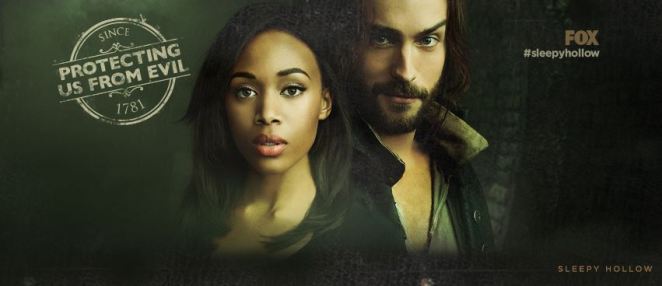
    The joker in me almost wants TPTB to pull a Bobby Ewing, but I’m pretty sure they won’t have to go that far. In spite of the show’s dialogue about Abbie’s death, I didn’t see a body. And even if I did, Sleepy Hollow isn’t based in the world as we know it. Our Lieutenant can be brought back to life.

    From the beginning Sleepy Hollow was a winner. It can be that way again.

    Photos lifted from here and here.

  • You’ve earned it.

    WaterWomanNot too long ago, I applied for a position as a blogger on another web site. In the application, I had the opportunity to select a subject to write on. Which option did I choose? Self care.

    Interestingly enough, soon after I submitted my application, I panicked. How could I write with authority on self-care? I mean, sure, I know it’s important to exercise, but when was the last time I worked out regularly? And my sleep schedule? HA!

    I could go on, but in short, I felt like a fraud. How could I possibly proffer myself as a self-care pundit when my own practice was in the toilet?

    This question made me take a closer look at my general attitude towards taking care of myself. There’s no denying that I know everything that I should be doing in order to be at my best. So why haven’t I given myself the treatment I deserve? After all, like the slogan says, I’m worth it.

    That’s when it hit me. My relationship with self-care came down to one simple thing.

    Belief.

    Specifically, the belief that I, Claire, can and should be kind to myself. Proper self-care is more than a way that I can show myself a little love. It’s is something I deserve.

    In fact, I think that that last point is the one that too many of us struggle with. Not too long ago I saw a sign that said

    GOD FIRST

    OTHERS SECOND

    ME LAST

    (emphasis added)

    Mind you, this was supposed to be an inspirational sign. Yet its words left me cold. When it comes to the grand hierarchy of priorities, there are times when others have be taken care of first. Yet constantly giving to everyone else without attempting to secure your own stability can be dangerous.

    Self-neglect can lead to imbalance and burnout. And once those demons take hold, how can we be expected to find the strength to serve others?

    We have the right to care for ourselves. Doing so isn’t selfish. It’s a matter of survival. And it doesn’t have to be hard. A day at the spa is lovely, but how often do we stop to take an extra breath when we’re in a rush?

    In order to put our best selves forward every day, I’m convinced of one thing. Proper self-care needs to be a priority. But it can only be valued once we understand it’s not a luxury, but our birthright.

    Photo Credit

  • “Say YES!”

    I don’t know about you, but I want Destiny’s Child to return. When they come back, they can do anything they want–gospel, soul, rock ‘n roll. I don’t care! I just need them in my life.

    I love this song so much!

    As you go into this week, keep your eyes on the prize. You’ve got what it takes!!

  • Watch It!: Underground

    Since childhood, I’ve been curious about my heritage. I’m first-generation Caribbean-Canadian. I didn’t pay much attention to this fact until I was older. However, there was one thing that I understood above anything else: I wasn’t only Canadian, but North American.

    A part of me has always been fascinated by the history of Black people in the United States. My country has its own tumultuous legacy involving race relations. However the fact remains that when America screams, we hear the echo. I was born merely a decade after some of the Civil Rights era’s most turbulent years. My hometown is predominantly white. I’m no stranger to racism, and I’ve always wondered about its continental beginnings.

    Throughout my life I’ve seen period dramas that portrayed slavery. Their approach differed widely—from focusing on it, to barely mentioning it. Roots was especially significant to me. When I was in high school I read Alex Haley’s book; I found the original miniseries online when I was older.

    Then a few months ago, I heard about Underground.

    At this point, maybe you’re asking yourself, “Does the world really need another story about slavery?”

    Now, you might say,”No!” Maybe you’ve been so badly scarred by the pain of racism that you don’t need a reminder of how it all began.

    Fair enough.

    But if you’re curious, I encourage you to give this show a chance.

    Yes, Underground is set in antebellum America. And it doesn’t shy away from depicting moments of despair and pain. But it promises to explore those moments through the lense of possibility.

    The “Underground” of the series’ title is the Underground Railroad. Noah is a slave played by Aldis Hodge. He’s a strong protagonist, active and eager to change his fate for the better. Here, it’s important for me to let you know that this is an action-oriented show. (In one interview, I heard an actor refer to Underground as a “thriller”.) As the show unfolds it will trace Noah’s journey as he leads a group of his peers to freedom. Jurnee Smollett-Bell plays Rosalee, a house slave. At one point in a scene with Noah, she states that in spite of any assumed perks, she and the other house slaves are, “still slaves. [It d]on’t matter where we sleep.” The poignancy of this line impressed me. It isn’t every day that a show will comment on a tradition that’s at the heart of colourism.

    Two of Underground’s characters who have a pivotal role are Tom Macon and John Hawkes. Tom is about to run a campaign to be a senator; he owns the plantation where Rosalee and her fellow slaves live. Meanwhile Tom’s brother, John Hawkes, is a lawyer and burgeoning abolitionist. I won’t spoil the story much further, but the writers have done their best to ensure that these siblings will continue to cross paths. A clash between these two men is inevitable. Although they’re related, by the episode’s end, I didn’t think either of them truly understood how different they are.

    Other familiar faces in the cast include Adina Porter (True Blood), Alano Miller (Jane the Virgin), and Christopher Meloni (Law & Order: SVU). I also think it’s important to point out that the show’s production team is inclusive. John Legend is an executive producer. Misha Green and Joe Pokaski are the series’ creators.

    The first episode of Underground left me feeling optimistic. The show’s premise promises that it will feature a perspective on its subject that most productions of its kind have ignored. Another plus for me is the suggestion that Underground’s characters are going to be truly dynamic—I already have hunches about who to be wary of, who I like, and who I despise. And yet…These are only hunches. One character’s scenes revealed a twist that left me disappointed—yet somehow, still curious. Is he really as awful as I think? Also, I care about Noah and his fellow slaves. It’s easy to say that a tale about a slave’s road to freedom will end predictably, but I have the feeling that there are plenty of surprises to come.

    Still, the question of relevance remains. I’m more than satisfied to say that Underground passed the test. The show’s underlying themes resonate today. When Black people experience racism intimately in real life, and our news casts are filled with police brutality, one can’t help but wonder how far we’ve come. Still, the strength of this show’s characters reminded me of who we are. Not merely oppressed people, but fighters. It’s important to use art to depict people of colour as dynamic and strong. Shows such as Underground have the power to inspire us to be hopeful, and more importantly, play an active role in the unfolding of our destiny.

  • The Magic of Misinterpretation

    In addition to being shared here, I’ve posted this essay on Medium and recorded an audio version for my podcast.

    #BlackGirlsAreMagic

    When I was a little girl, there were times when I regretted being brown. My schoolmates used to tease me. Their comments left me curious about having different facial features and lighter skin.

    As an adult, I found solace in the pages of The Bluest Eye. I couldn’t relate to everything in Pecola Breedlove’s life. Still, I remembered what it was like to believe that life would have been just a little bit better if only I looked like everyone else.

    This week on Twitter, I learned that a writer named Quinn Norton objected to #BlackGirlsAreMagic. This is a hashtag created to celebrate Black beauty in a world where — in spite of the success of women such as Viola Davis and Nicole Beharie — we still often feel pressure to aspire to something else.

    After her misinterpretation was righteously rebutted, Ms. Norton retreated and wrote an explanation of her critique that I am still trying to digest. Her essay can be found in full here.

    Among Ms. Norton’s claims is the notion that #BlackGirlsAreMagic’s purpose is to display gratuitous shots of women’s breasts. She took great care to declare that

    “if you look at #BlackGirlsAreMagic at the moment I am writing this, and you skip over the tweets about me, you can find black girl’s achievement in between a lot of boobs. That bothers me, because the idea what we do something good but BOOBS BOOBS BOOBS is what crushes many girls’ dreams of living a public life. The women who follow each other may or may not see the tag that way, because they may or may not look at that live flow. Even then we tend to look for what confirms how we see a hashtag, because that’s how human brains work.

    (emphasis added)

    In spite of my familiarity with #BlackGirlsAreMagic, at this point Ms. Norton’s words drove me back to Twitter. In an attempt to make sense of her concerns, I logged into the site and looked up the images associated with #BlackGirlsAreMagic. I found a few photos that were clearly posted by racist trolls. However apart from that, the majority of the images were of Black women looking…Good. Some were dressed up, some dressed down. There were children as well as grown women. All looked perfectly normal and content in their beautiful, brown skin.

    The fact that Ms. Norton would see the images associated with #BlackGirlsAreMagic and conclude that the hashtag was designed to focus on women’s breasts is disturbing. Her attitude is reminiscent of an old-school colonialist, desperate to categorize a group of “others” as unacceptable simply because she is not familiar with them.

    Furthermore, even if the photos of Black women displaying their cleavage were nearly as plentiful as Ms Norton claimed, her objection would still seem suspect. Black women are women. We have BREASTS. I’m shy about sharing mine with the world, but if another woman is comfortable with posting cleavage shots online, who is it harming?

    At another point in her essay, Ms. Norton attempts to be informative regarding hashtag use. With respect to the idea of a person or group’s right to claim a tag, she said that “we can own a hashtag in a community, but we can’t own it a wider public sphere. It has a hashtag life of its own.” I can only assume that here, Ms. Norton meant to enlighten those who use #BlackGirlsAreMagic regarding how hashtags work. However it seems to me that she is the one who fails to comprehend social media dynamics.

    Obviously, one cannot own a hashtag any more than a writer can claim to own the alphabet whenever she uses its components to express a thought. Yet from the originator to the community that made it popular, most individuals understand the purpose of a hashtag is to share relevant points pertaining to a particular topic.

    To emphasize her point about a hashtag’s malleability, Ms Norton also states that “I’m not wrong about how [a hashtag] can and does change over time and to different audiences.”. And indeed, Ms. Norton is not wrong about the fact that hashtags are interpreted differently by different people.

    However she misunderstands the influence that those who have nothing to do with a tag have on its interpretation. If a hashtag is irrelevant to a cause that someone cares about, there’s a chance that he won’t find it meaningful, and in all likelihood, dismiss it. That’s the way most hashtags work. Not everyone will find sense in a particular tag’s creation. Still, that’s nothing for them to worry about. If I stressed over every hashtag that I couldn’t relate to, I wouldn’t be able to sleep at night.

    As an aside, I can’t help but wonder, if #TransMagic was used to celebrate members of the Transgendered community, would it have been met with the same level of presumptuous imposition? There’s no shame in admitting to being wrong about a situation, without attempting to insult those that you unfairly criticized.

    The wonder of humanity is how different we are in spite of our similarities. I believe these differences ought to be celebrated, and above all, respected. However, that was not the case with Quinn Norton’s critique of #BlackGirlsAreMagic. Her words provide an example of a bias within society that needs to be corrected.

    I long for individuals to understand: There’s nothing wrong with giving those of us who are non-white or outside of society’s gender norms room to appreciate ourselves and each other. In those circles, ideas that do not pertain to you are bound to be discussed. Yet that does not mean that said discussions are inherently wrong.

  • PodPost – Episode 5.0 – The Desire Map

    I’m getting back into podcasting and definitely learning and growing as I go. This is my latest episode on Danielle LaPorte’s book The Desire Map. Enjoy!