Category: Hair we go again

  • Alopecia, anyone?

    Alopecia, anyone?

    As an adult, in some small way, I’ve probably always had an issue with hair loss. In 2018, I was under a lot of work-related stress. I remember that back then, a space that was nearly the size of a quarter in diameter cleared out completely. Luckily, while on the job, I hid my hairless territory via a hairstyle involving a faux ponytail. But before that time, that section of my head had been a trouble spot for years.

    My real rude awakening came a little more recently.

    Over the last several years, I’d been rocking crochet braids. For the uninitiated, this is a style where you cornrow your hair, then use a latch hook to attach extensions to your head.

    Unfortunately, while styling my hair this way, I’d made a major faux pas. At the beginning of my braid journey, I was vigilant about washing or soaking my braiding hair in a mix of conditioner and water.

    Just FYI: In case you’re reading this and don’t know, braiding extensions are often made with chemicals that can cause your scalp to itch severely. Via YouTube, I quickly learned about the importance of washing extensions, or soaking or soak them in an apple cider vinegar and water mixture before using them. Doing this dilutes harmful chemicals and eliminates the itching.

    But over time, I didn’t always bother with this ritual. Today, I feel like this is an awful thing to admit, and perhaps a bit of a dangerous practice. Especially considering the way my scalp responded. In hindsight, I wonder if braid extensions’ chemicals can be blamed for more than just physical discomfort.

    And while I’m informing people, let me share this reminder: If you wear braided styles, wash your extensions! I don’t care how expensive they may be, or how good a brand’s Instagram account may look. One of my most aggravating crochet-braid experiences came after I used one of the most popular crochet hair brands available.

    The look they provide is stunning, and if my hair grows back, who knows? I might even use their products in the future. (Is that horrible for me to admit? Maybe.) But they’re absolutely not getting anywhere near my head without a thorough soaking.

    Where was I? Oh yes! The story of my hair’s demise!

    Facing the Truth

    Between 2020 and 2021, when I wasn’t wearing braids, I tried twisting my natural hair. Back then, it was about shoulder length. In the back of my mind, I had a pretty liberating motivation for my new hairstyle: I wanted to cultivate a set of locs. But a key problem put me off of following through. After one twisting session, I looked in the mirror. I remember feeling around the roots of my twists. Across my entire scalp, there was a disturbing difference in my hair’s thickness.

    From just above my ears, down, I couldn’t ask for thicker hair. No one could. The lower back of my head was—and is—extremely fertile ground.

    But the front and crown of my head told a different story. The twists in this region were about 50% thinner than the others. I didn’t know why. But I knew it was a problem. I twisted my hair once or twice after that, and noticed the same results.

    Flash forward to the latter half of 2021. I decided to face the truth. I bought clippers and cut my hair. The end result was short—no more than 1 or 2 inches long. And in spite of a normal front-facing look in selfies, the sight of my scalp had me worried.

    I could mess around with combing and brushing techniques all I wanted. But my hair was thinning. And it was obvious.

    By December, I’d had enough, and on New Year’s Eve, aka my cousin’s birthday (Hey, M!), I decided to act.

    I took out the clippers that I’d bought for my previous haircut, and I shaved my head.

    Acceptance?

    Since that day, the shortest guard on my clippers has become my very best friend.

    During the first half of this year, every couple of weeks, I clipped my hair. Later on, this spring, I was on the verge of giving myself a buzz every week. Sometime in the summer, though, I paused. I let my hair grow out.

    I’m not quite sure of why. I think one part of me was feeling regretful over this new segment of my routine. Another part of me could hear the echoes of my ancestors telling me, “Your hair is your crowning glory…”

    Eventually, the urge to investigate became stronger than my sense of denial. I needed to face the reason for my disappearing mane.

    Earlier in the year a family member had encouraged me to see a doctor about my hair’s demise. I made an appointment, but I was nervous. In the past, I’ve sat across from medical professionals who have dismissed my concerns about odd symptoms. But my current doctor replaced my old one years ago, and I haven’t seen him very often.

    Thankfully, in spite of my doubts, deep down I felt empowered. With my last cut several weeks in the distance, the evidence I needed to prove my case was growing, or should I say not growing, out of my head.

    Once in my doctor’s office, I found myself relived to get to the point. “I’m losing my hair…” I said, and showed him my scalp.

    “People get alopecia for a few different reasons…” I sighed, thankful to be taken seriously.

    As a first step in exploring the roots (!) of my problem, he arranged for me to have some blood tests. Time will tell if they reveal anything.

    After months of casual speculation, my doctor’s attitude was refreshing. Hearing him use actual terminology for what I was going through made me feel validated and, in a sense, vindicated. All along, deep down, I knew I had alopecia. (From what I understand, if you’re losing your hair, this condition doesn’t go by any other name.)

    But the reason that I have it remains a mystery.

    In the days when I was playing Dr. Google, I thought it was CCCA alopecia. But it could also be hormonal, or originating from something else.

    From what I’ve seen of both sides of my family, the older women all have healthy heads of hair. Therefore, I don’t think it’s hereditary.

    The main thing I’m wondering right now is how long I’ll have to put up with this. Is my alopecia something I will need to live with the rest of my life, or do I have a treatable version of this condition?

    As I said, steps are being taken to investigate. All I can do now is be patient.
  • Unloc’ed: What’s up with my hair?

    clairehairnov2011
    Same hair. Old photo.

    Well for one thing, it’s loose again. In case we haven’t met, my name is Claire, and I’ve tried to loc my hair several times. Considering how fickle I’ve been in the past, I may try again in a few days or a few years. Who knows?

    For now, though, my attempts are over.

    Shortly after I came back home this spring, I started to undo my dreads. This decision was completely random. Unlike the last time, there wasn’t a declaration that “I miss my ‘fro!”. I just put my hands in my head and said, “Time to take these out!”

    Although I didn’t know why, I felt determined. (Thank God my mother pitched in!) We worked hard and finished after several days.

    Along the way, I learned that my drive was driven by destiny.

    In the past I’ve been put off of dreads because I’ve had problems with build-up. (Once I gave up after finding lint from a scarf in one of them.) Sadly, this time around was no exception. As we undid the twists at the nape of my neck, we made a discovery. One loc in particular seemed to have absorbed every piece of dust that had crossed its path.

    At first I was disgusted.

    I didn’t get it. I was careful! I’d done my best to follow the (un)written rules of dreadloc care:

    I had a black satin pillowcase and slept with a scarf (to avoid oddly-coloured lint while I slept). I only washed my hair with transparent shampoo. As for products, I hadn’t used any that I could think of…Except for perhaps a light hair oil, maybe once or twice

    I didn’t understand what could’ve turned my head into Dirt Central. I still don’t.* Especially since I was facing–what I thought was–a worst-case scenario. I’d had buildup before. But not like this!

    Quite honestly, a part of me felt defeated. Since my last big chop, my hair had grown to the point where taking care of it had become a bit of a chore. In order to ease some of my workload, locs felt like the next logical step.

    I also felt angry and ashamed. During the months that my locs were developing, someone I know seemed a little too fond of telling me, ”Your hair is dirty.” Since this person doesn’t like natural hair, I just thought they were being rude.

    Boy was I wrong!

    So now what?

    Well, I’m right where I didn’t want to be–dealing with loose medium-length hair. (If you need a reference, it’s about as long as it was in the photo at the top of this post. Stretched it reaches my shoulders.)

    I didn’t think I’d have the patience to deal with my crowning glory again, but it doesn’t matter. Because now, I have to.

    These days forces seem to be conspiring to teach me lessons about patience. It looks like my hair is just another part of the plan.

    I’m curious. Have any of you tried to loc your hair and wound up frustrated? Feel free to tell me about it!

    *Even today, every now and then I wistfully contemplate getting locs again. I wonder what I’d have to do–keep my hair covered 24/7?

  • Hair – A Love Story

    Yesterday on Twitter I happened upon a discussion about black people’s hair. The Essence Debates team was soliciting thoughts on wearing natural hair at work. Initially, I was ticked off.

    “It’s 2013, and we’re STILL discussing this…?!?”

    My mind even slipped into snarky territory.

    This is what’s wrong with black women. We still think we need permission to be ourselves.

    But then I looked at myself. You’re reading a post by someone who still receives notes from relatives who offer to make her over. These offers stem from the belief that I’d look better if my appearance matched their vision. And there are times when their words still get to me. Hence, I’d be lying if I didn’t say that the way I look is a sensitive topic.

    Hair is HUGE in the black community—especially among black women. And for many of us it’s not a matter of mere vanity.

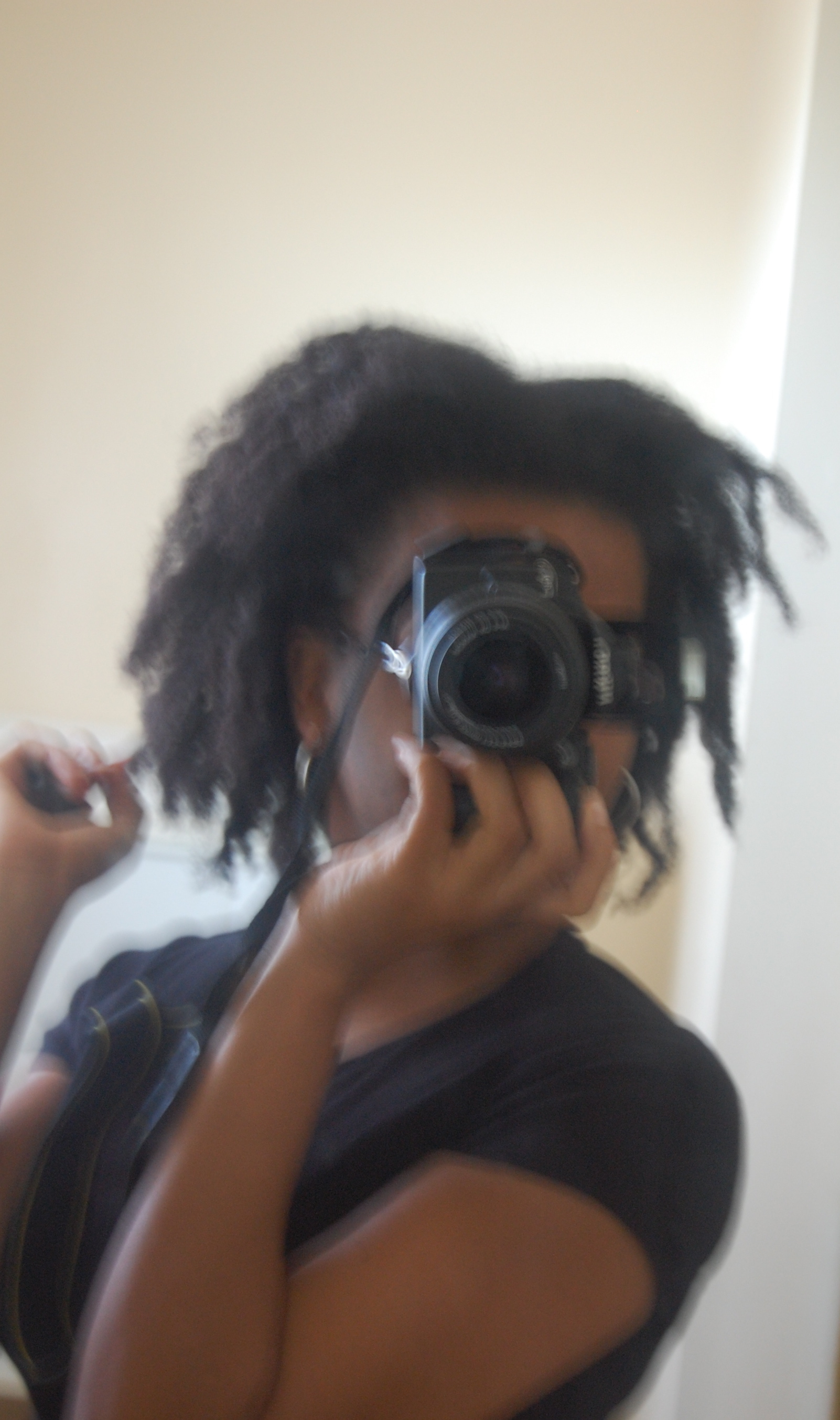
    Take the selfie that’s a few lines down.

    I think I look ok. Still, there’s a huge section of the population that will look at that shot and think my hair shouldn’t be seen. Not unless it’s straightened or weaved to within an inch of its life.

    If you don’t quite get where I’m coming from, stick around. The text after my photo is from a draft of an essay I wrote earlier this year for an online magazine. I’m not sure if they still want to use my work. But if you’re new to my blog I figured now’s as good a time as any to tell the truth about how some black people feel about the way they look…

    clairesulkyselfie

    If certain people had their way, I would look like Naomi Campbell.

    I figure I’m halfway there. I’m black and although my skin isn’t exactly perfect, I have basic features that some consider beautiful.

    Still in some folks’ eyes, there’s one thing keeping me from being accepted in established society. My hair.

    For over a decade I’ve refused to get it chemically straightened. (I’ve tried a few times. But I never went more than a couple of months before cutting my hair off and starting to grow it out again.) I remember when I first decided to sport my own hair or “go natural”. When I was 24 I went to get my hair done at a pricy Toronto salon. However, according to their stylist, my hair was chemically over-processed. The only cure that was prescribed was a cut. I made an appointment, and by the end, just about all of my hair was gone.

    In the aftermath, I decided that I actually liked the feel of what sprouted naturally from my scalp. I let my strands grow. I wanted to get to know them.

    Fast forward to earlier this year. I barely had half a foot in the door of a career in education. I was as a substitute teacher. I’d spent a substantial amount of time trying to make the leap into full-time work, but without any success.

    And according to everyone from family to older, supposedly wiser (black) friends, a steady job eluded me because of my appearance.

    People’s attempts at giving me advice about this problem taught me an intriguing truth:

    You could take the most cultured, well-spoken black person in the world. Their level of education could rival Stephen Hawking. Yet confront said individual about whether or not a black woman has the right to wear her hair in its natural state…?

    You might just be opening a Pandora’s box.

    After I earned my BA in the late 90s, less than a decade afterwards, I decided to pursue a degree in education. A few months after I graduated I was taken to visit an older relative’s friends. I told her of my non-adventures as a teacher—during the last few weeks of my program I had attended an interview, but was unsuccessful.

    The woman I spoke with was a proud individual who owned her own business. After some small talk, she asked me the most benign of questions.

    “Why do you wear your hair that way?”

    At the time I didn’t think anything of how I looked. My hair was tidy. I wore a short afro puff with a dark headband. It was a subdued style.

    Nonplussed, I told the truth.

    “It’s my hair on my head.” I shrugged. I didn’t see anything wrong with the way I looked. I thought my answer said it all. It didn’t occur to me that there was anything detrimental about a black person wearing her own hair in public without altering it.

    Yet the woman in question didn’t like my response. She lit into me. She commented on my lack of professional success. She told me that it was no wonder I hadn’t been hired—she herself would not hire me. Not with my hair looking like THAT.

    Minutes later, I witnessed a disturbing conversation. According to my elders, it was critical for black people to assimilate into North American society. And that assimilation was often hindered by one vital item. Our hair. I sat stunned as in front of my face, I was talked about as though I’d announced a decision to start a drug habit.

    Like it or not, a standard of conformity concerning hair exists among black people. For many, the ideal aesthetic involves the straighter tresses found on women of other races. And those who don’t toe the line risk being ridiculed.

    In addition to having been told that my hair needs to be “done”, over the years I’ve heard that it looks like “filth”. (And by “filth”, I mean actual “shit”.) Online I’ve read stories of parents threatening to withhold privileges from their teenage children, men giving their wives a hard time…Two of the most significant things that black women are told about choosing to wear natural hair is that they will remain single and that they aren’t employable. The notion of Black Woman With Natural Hair = Unworthy is huge. And hurtful.

    It’s kind of funny. The people who insist on being nasty to those of us with natural hair think they’re doing a good thing. I’ve heard some of them try to justify their obnoxious attitudes. They say they want to spare those who walk around with nappy hair from ridicule. Yet just who is it that is being insulting?

    The truth is that most people who aren’t black don’t even know that our natural hair texture is a problem. More than once, I’ve received complements on my hair from peers of all colours. (Even in its current crazy, developing-dread stage.) Back when I first went natural I tried to relay this information to relatives. Yet what did I hear in return? That the person in question was lying. Plain and simple.

    Now, I could see their logic if only one person had told me that my hair looked nice. But various, separate individuals? I even read an article online where the author insisted that positive feedback concerning our hair can’t be authentic.

    Meanwhile, I believe that a change is long overdue. Some black people need to grow beyond the idea that every time a non-black person is kind to one of “us”, their gesture is insincere.

    I mean, honestly. This is 2013. These days, the only non-blacks who hate black hair’s natural texture are racists.

    In all seriousness, the amount of nonsense surrounding the way black people view natural hair has got to stop.

    People in North America have been blinded by the most insidious of all beauty myths. Curly hair is not unattractive. Nappy hair is not hideous. Having it should not make someone unemployable or unacceptable. However, many black people have grown too accustomed to seeing textured hair manipulated into straighter styles. Anything that does not fit this ideal is depicted as a problem.

    Yet this difference is not a problem. It is not a barrier. Rather, authenticity is an opportunity.

    If only the people I love would recognize it.

  • Hair we go again. And again.

    There’s a bigger, better post that I meant to share earlier today. But I’m still wrestling with it. I feel a bit torn about tossing this li’l thing into the online ether. Still…Enjoy the commercial break. 😉

    Remember these?

    locs6thmonth - March 12 2013

    After only 9 months, they were out in June. But it’s August and I find that I miss my my locs, aka the-dreads-that-almost-were.

    If you know me in real life, this flip-flopping should be nothing new. I’ve started and stopped locs a billion times before.

    Right now my hair’s in twists. We’ll see if I leave them in. I have a lot on my mind.

  • Natural Hair – Products: The Clean-Up Crew

    This is the end of the series on my haircare basics. If you missed my earlier posts, you can catch them here and here.

    Today I’m sharing what I use to wash my hair.

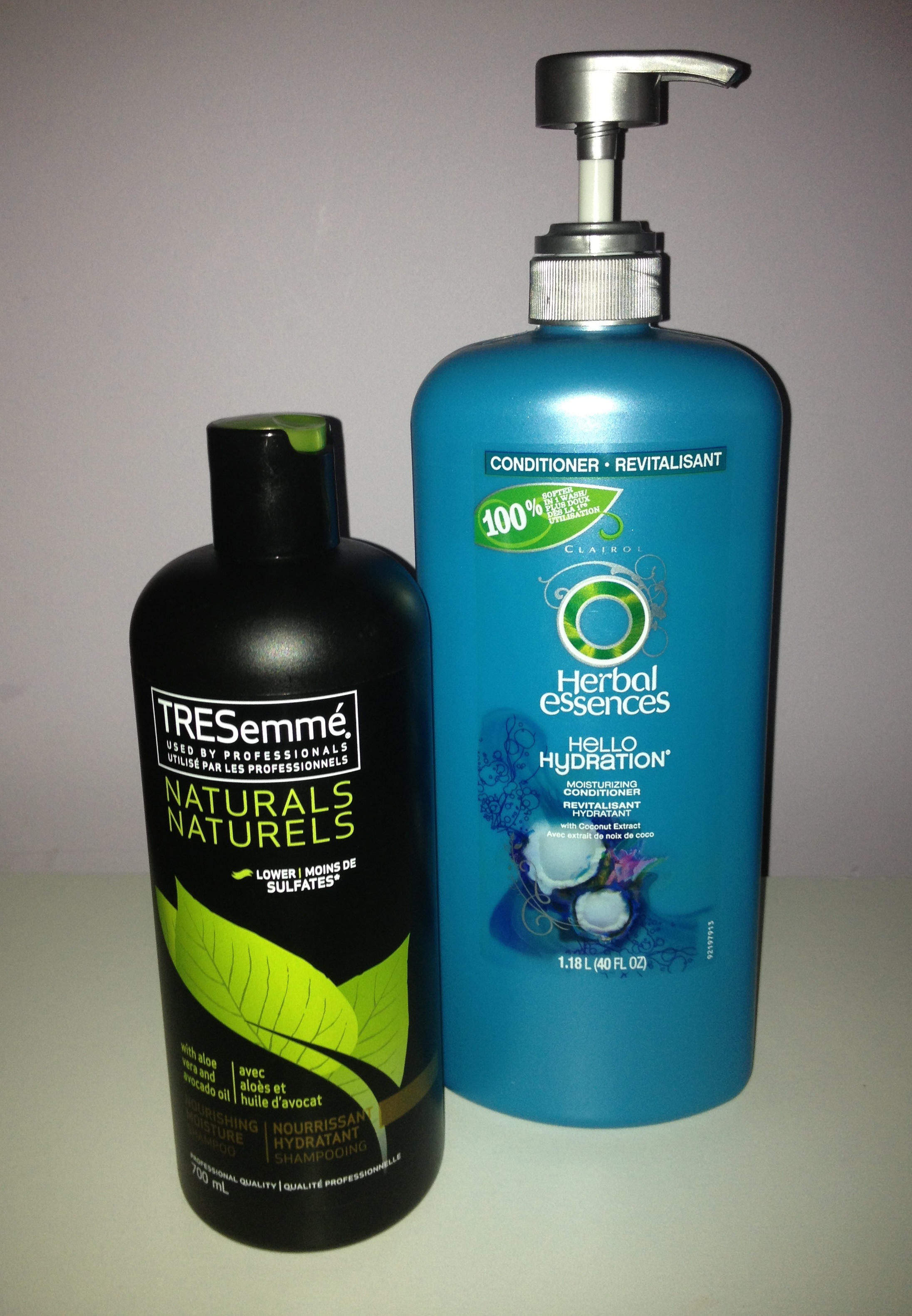
    haircleaningproductsHerbal Essences Hello Hydration – In June I bought the largest bottle on the shelf right before I started to undo my hair. (It’s over a liter of conditioner!!) Little did I realize that when it comes to taking out locs, the best thing for me to do was use either water, or nothing at all.

    Nevertheless, the purchase wasn’t a waste. I’ve always loved using Hello Hydration on my loose natural hair. In addition to cowashing, it’s great for detangling.

    I figure the size will save me money in the long run. The bottle is one point eighty-nine litres. I expect it to last me until doomsday Christmas.

    TRESemmé Naturals Nourishing Moisture Shampoo – Although I love cowashing, every now and then I use a regular shampoo on my hair.

    I bought this brand purely based on the reputation of its conditioner counterpart*. If it disappoints me, you’ll be the first to know.

    *If you type “tresemme naturals conditioner natural hair” into Google, a ton of search results will appear. Apart from Hello Hydration, TRESSemmé is the only other brand name that’s really been on my radar.

  • Natural Hair – Products: The Style Team

    As mentioned in an earlier post, these are the gems I’ve been using in my hair.

    hairstylingproducts

    Oyin Handmade’s Burnt Sugar Pomade – This is an oil-based product. The packaging says it’s a “humectant”.

    Mind you, I’m not too sure about it’s moisturizing properties. The main reason I keep it around is that it smells like butter tarts. (If you’re Canadian, you probably know what I’m referring to. If not, I feel sorry for you. 😉 )

    Seriously, though. It smells amazing.

    My only caveat is that it doesn’t dissolve easily. Normally after I’ve rubbed it between my palms for a few seconds, some bits of one of its heavier ingredients (a type of wax?) are still solid.


    Qhemet Biologics Burdock Root Butter Cream
    – My hair LOVES this stuff. It’s a moisturizing cream that has a very light citrus scent.

    The packaging says that it “Softens and moisturizes fine, thin hair.” This statement made me pause.

    Maybe there’s a secret black hair scale that I’m not aware of. But my hair’s pretty dense. And it loves this stuff!

    Some people say that if you have type 4 hair, you should use Qhemet’s Alma Olive & Heavy Cream. However,  that only worked for me some of the time. Quite often I felt that it was too heavy. If it’s too much for you, and you want to stick with Qhemet’s products, you might prefer their BRBC.

  • Natural Hair – Products: Homemade Hair Treats

    Since I’m trying to put more of myself into this blog, I thought it would be fun to do a brief series on what I use in my hair. I’m not a beauty authority. I’m just sharing what I’ve been using on my type 4a-z hair.

    After my locs were undone, I rounded up my old tools and products. I’ve been looking longingly at Honeyfig’s site. But I’m broke. And quite honestly, I already have what I need from them in the first place. (I’ll show you in my next post.)

    Now then. A lot of natural-haired women seem to have a spray and an oil in their cabinet. These are mine…hairDIYproducts

    Homemade Hair Spritz – Two of the main ingredients in a popular brand-name spritz for natural hair are water and vegetable glycerine. I bought it once purely so that I could say that I’d used it. Nevertheless, I remember that I felt a bit disappointed. I wound up spending a lot of money on something I could make from scratch with ingredients that I already had at home.

    Do you have a favorite recipe?
    All I used is water, glycerine, and essential oils.

    Basic Oil Blend – I have plenty left over from when I was locking my hair. Thus far I’ve used it mainly on my scalp.

    It’s a combination of olive oil, castor oil, along with other oils such as almond, etc.

    I also used essential oils such as rosemary, orange and lavender.

  • Amen and hallelujah.

    “I love my hair because it’s a reflection of my soul.”

    It’s appalling to me that from childhood, many black women are taught that their hair is nothing but a problem that must be dealt with. Rather than being told about how to care for it, they learn that it needs to be altered or disguised in order to be considered “beautiful”.

    Thank God for Tracee’s video. I need to get around to making a response.